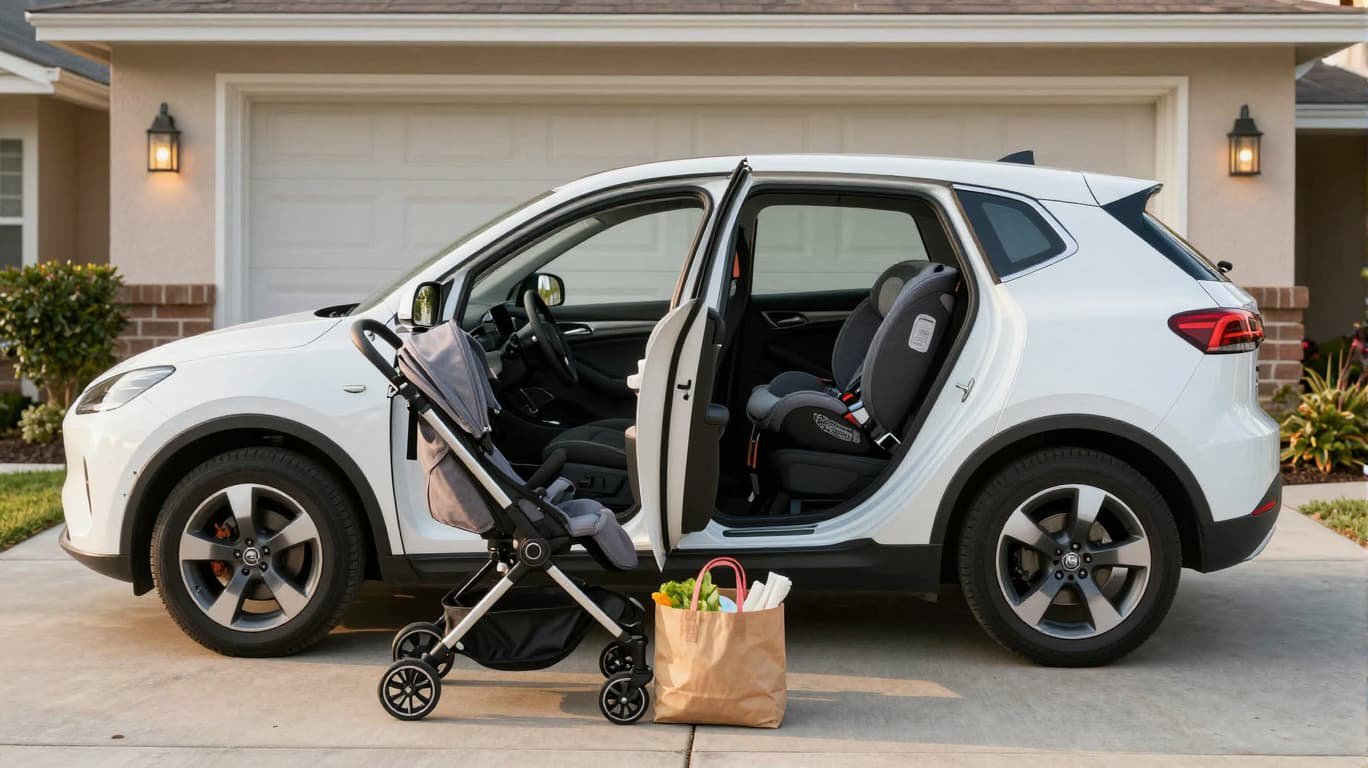
When an electric car first arrives at a household with two vehicles, it usually plays a supporting role. The gas car handles the long trips, the uncertain schedules, and the errands that require maximum flexibility. The EV takes the predictable stuff — commuting, school runs, grocery runs. It is the efficient one, the quiet one, the car you plug in at night and take for granted.
Then something shifts. The gas car starts sitting. A week passes without anyone filling its tank. A month. The EV is simply more pleasant to drive, cheaper to fuel, and already parked in the spot closest to the charger. Without anyone making a formal decision, the electric car becomes the main family car, and the gasoline car becomes the backup.
Owen Barrett watched this happen in his own household and has heard the same story from dozens of readers. When an EV becomes the primary vehicle, several things change — some welcome, some requiring adjustment. Here is what to expect.
The gas car becomes a driveway ornament
The first change is the most visible. The gasoline vehicle that used to log most of the household miles suddenly sits unused for days or weeks at a time. Its battery may go flat. Its fuel stabilizer becomes a relevant purchase. Dust accumulates on the hood.
This is not a problem, exactly, but it is a shift worth acknowledging. A household that keeps a gas car as a backup needs to remember to drive it occasionally — to keep the battery charged, the fluids circulating, and the tires from developing flat spots. If the gas car is only used for one road trip every three months, it may make more financial sense to sell it and rent a vehicle for those trips instead. Several readers have done exactly that, pocketing the insurance and maintenance savings.
Charging stops being optional
When an EV is a second car, missing a charge is inconvenient but rarely a crisis. You take the other car. When the EV is the main family car, the charging routine becomes non-negotiable. Forgetting to plug in overnight means a morning scramble, a delayed departure, or an unplanned fast-charging stop.
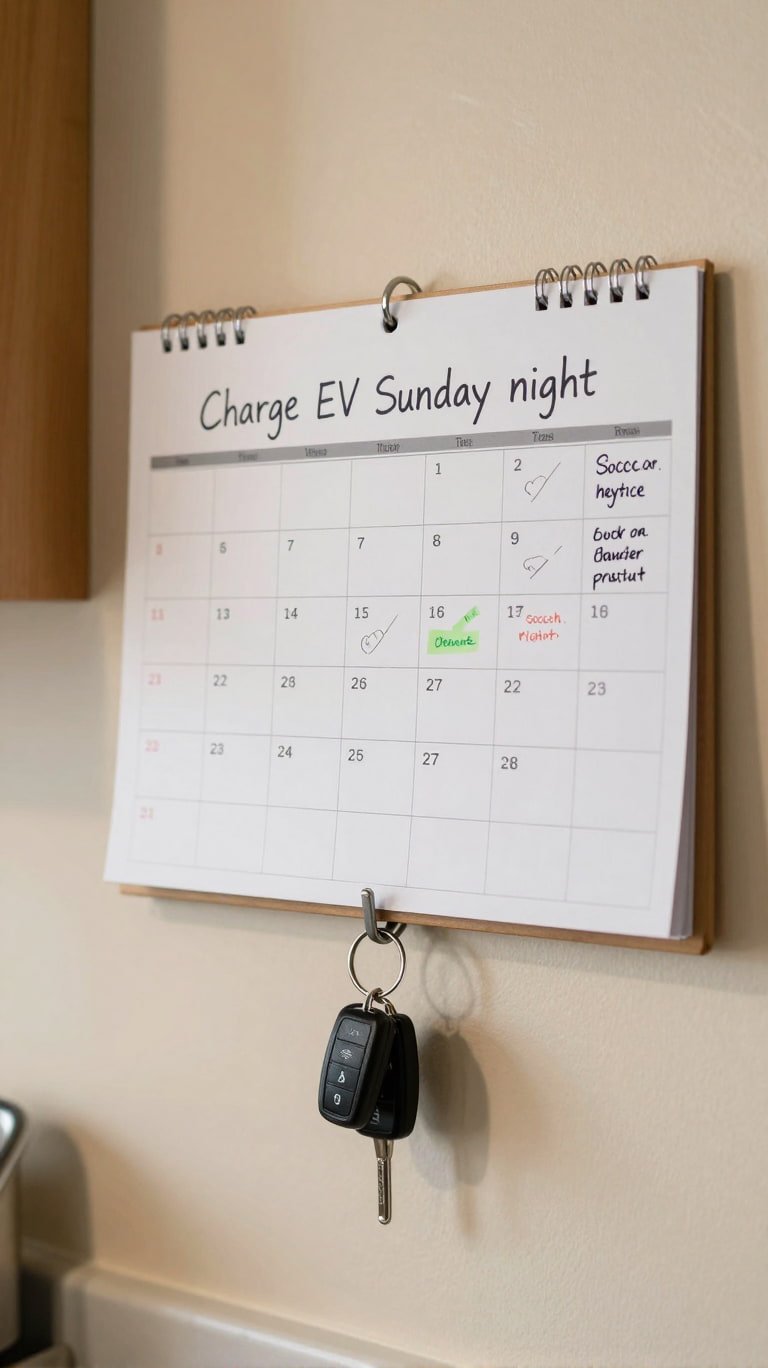
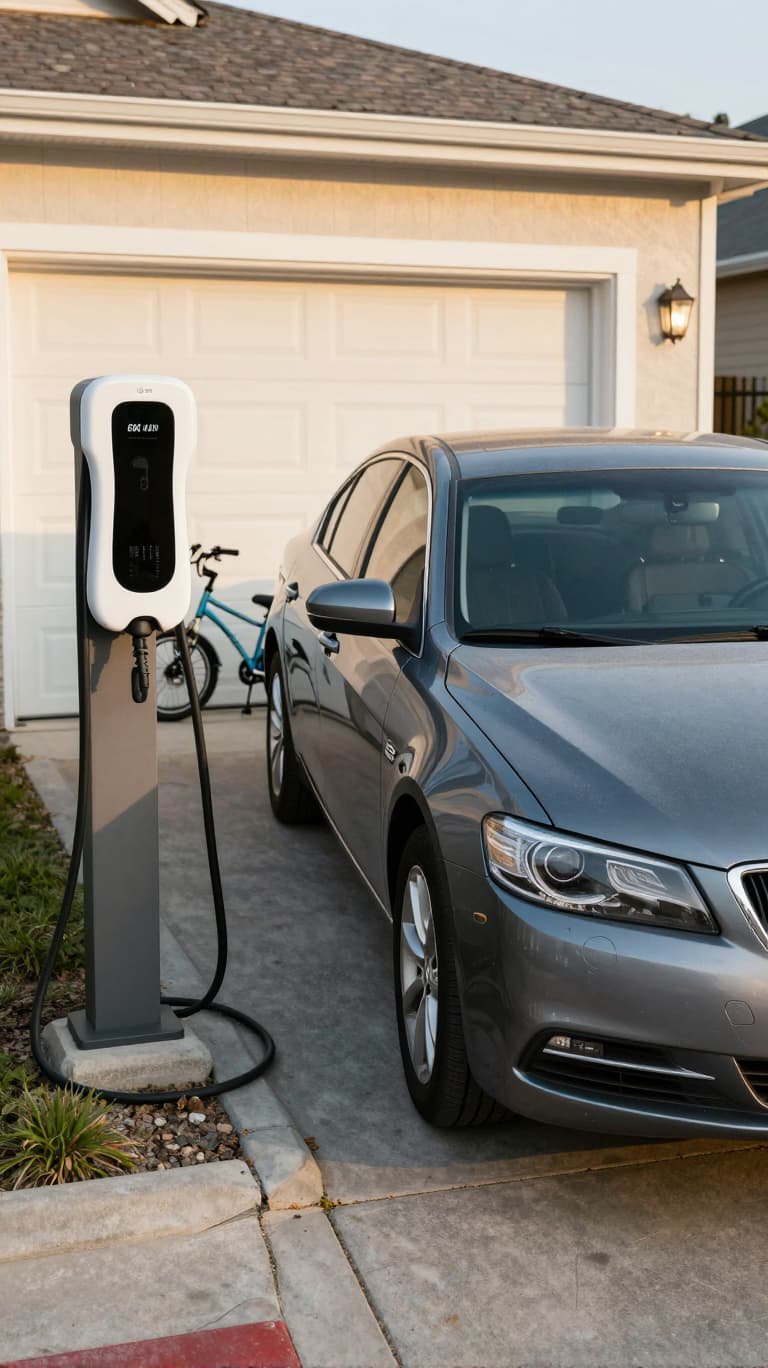
The households that adapt best are the ones that make charging a fixed part of the evening routine — as automatic as locking the front door. The cable lives on a hook near the charge port. Plugging in takes five seconds. Nobody thinks about it. The households that struggle are the ones that treat charging as a task to remember rather than a habit to build.
The table below shows how the charging dynamic shifts when the EV moves from secondary to primary vehicle.
Factor | EV as second car | EV as main family car |
|---|---|---|
Daily charging discipline | Helpful but not critical; backup car available | Essential; no automatic fallback |
Weekend planning | Occasional top-up for Monday | Full charge expected for unpredictable weekend needs |
Road-trip role | Rarely used for long trips | Often becomes the default road-trip car, requiring route planning |
Backup plan for missed charge | Take the gas car | Public fast charger, schedule adjustment, or a stressful morning |
Weekend errands get reorganized around range
A gasoline car can be refueled in five minutes anywhere, so weekend planning is indifferent to the fuel gauge. An EV that starts Saturday morning with a partial charge requires a small amount of foresight.
Families that thrive with an EV as the main car develop a weekend rhythm. They know roughly how many miles Saturday's errands will cover — the soccer fields, the hardware store, the grocery pickup — and they make sure the car has enough range before leaving. Usually this means plugging in on Friday night, even if the battery is not low. The goal is not to optimize. The goal is to remove the question from Saturday morning entirely.
This is not a burden. It is a small adjustment that becomes second nature. By the third month, nobody in the household is consciously thinking about it. They are just plugging in on Friday night, the way they take out the trash.
Everyone learns basic charging etiquette
When an EV is the main family car, it is not one person's car anymore. It is the car that does the school run, the partner's commute, the teenager's practice pickup. That means everyone who drives it needs to understand a few basic things: plug it in when you get home, do not leave the cable on the ground, and if the battery is below a certain level, mention it to the next person who will drive.
This is not complicated. It is the same kind of shared understanding that households develop about refueling a gas car — "I left the tank low, you'll need to fill it" — translated to a plug and a schedule. The transition takes a few conversations and a few reminders, then it settles.
The road-trip question gets more serious
When the EV was the second car, road trips were optional for it. The gas car could always step in. When the EV is the main car, a family road trip is likely to be an EV road trip, and that means planning stops, checking charger reliability, and building a route that accounts for charging speed.
For families who take one or two long trips per year, this is manageable. For families who take frequent long trips through areas with thin charging infrastructure, an EV as the only practical vehicle can become a source of friction. Some households solve this by keeping a plug-in hybrid or an efficient gasoline car as the second vehicle. Others decide that the EV's daily advantages outweigh the few days of planning required for road trips. There is no single right answer — only the answer that fits the actual travel patterns of the household.
Maintenance becomes an afterthought
One of the quietest shifts when an EV becomes the main family car is how little attention it demands. No oil changes. No transmission service. Brake pads that last indefinitely. The maintenance schedule for the first several years is mostly tire rotations and cabin air filters. The car that gets the most use is also the car that needs the least upkeep.
For a busy household, this is a meaningful quality-of-life improvement. The family calendar loses the recurring "oil change" reminder. The Saturday morning trips to the service center become rare. The car that works hardest asks for the least.
The gas station becomes a distant memory
There is a particular moment, usually around the second or third month of the EV serving as the main family car, when someone realizes they have not visited a gas station in weeks. Not intentionally. It just stopped being part of the week.
The fuel savings are nice, but the time savings are better. The five-minute detour, the smell of gasoline, the mental note to leave early because the tank is low — all of it disappears. For families with young children, the value of never unbuckling a sleeping toddler at a gas pump is difficult to overstate.
When the experiment becomes the norm
The transition from second car to main car happens without a ceremony. One day, someone notices the gas car has not moved in two weeks, and the EV is the one that handles everything — the commute, the errands, the weekend trips, the unexpected errands. The household has quietly reorganized itself around the electric car, not because anyone insisted, but because it fit.
The best EV is the one that fits your life without asking you to change your personality. When it becomes the main family car, it has passed the highest test a vehicle can face. It has earned its place not through ideology, but through the quiet accumulation of ordinary days.