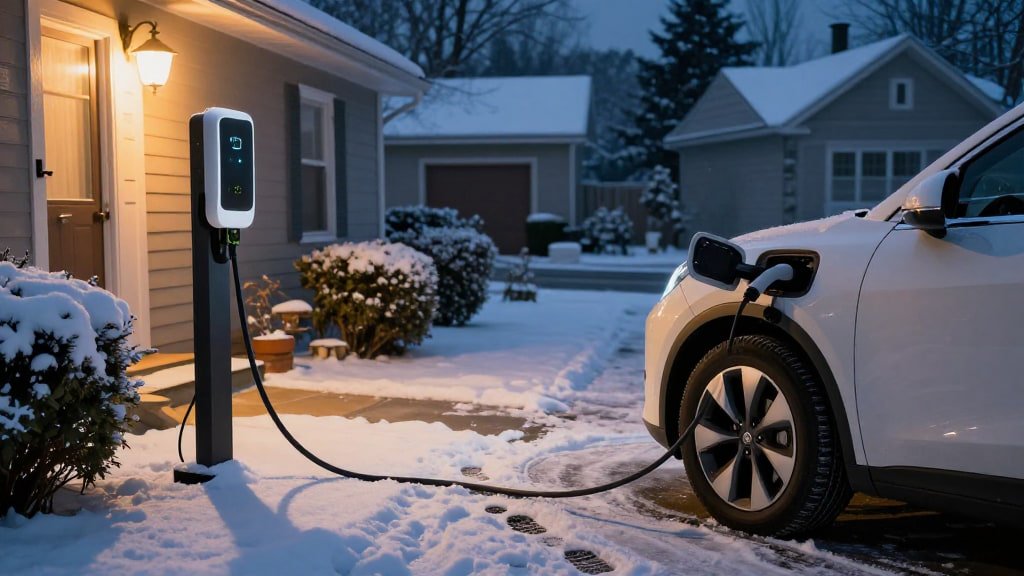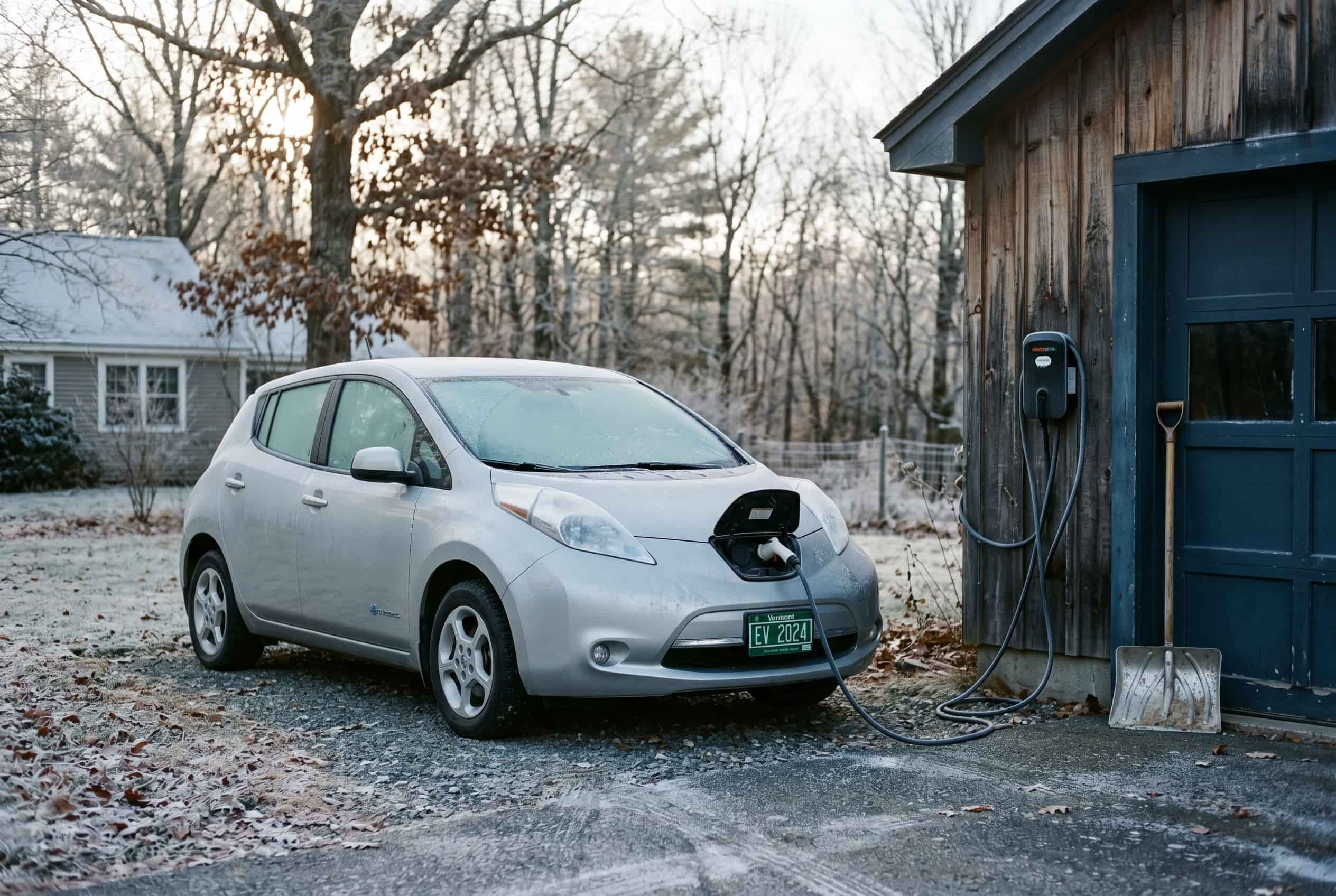
The first cold snap after buying an electric car is a moment of mild panic for a lot of new owners. The range estimate on the dashboard drops. The heater draws power. A commute that consumed forty percent of the battery in October suddenly consumes fifty percent in January. The question every new EV owner asks in winter is the same: is something wrong with my car?
Nothing is wrong. The car is behaving exactly as the physics of lithium-ion batteries dictate. The difference between summer range and winter range is not a flaw. It is a tradeoff that can be planned for, adjusted to, and after one full winter, mostly forgotten about.
Owen Barrett has now driven through several North Carolina winters in an electric car. The first one involved a lot of unnecessary anxiety. The second one was boring. That progression — from worried to bored — is what a good winter routine delivers.
How much range actually disappears
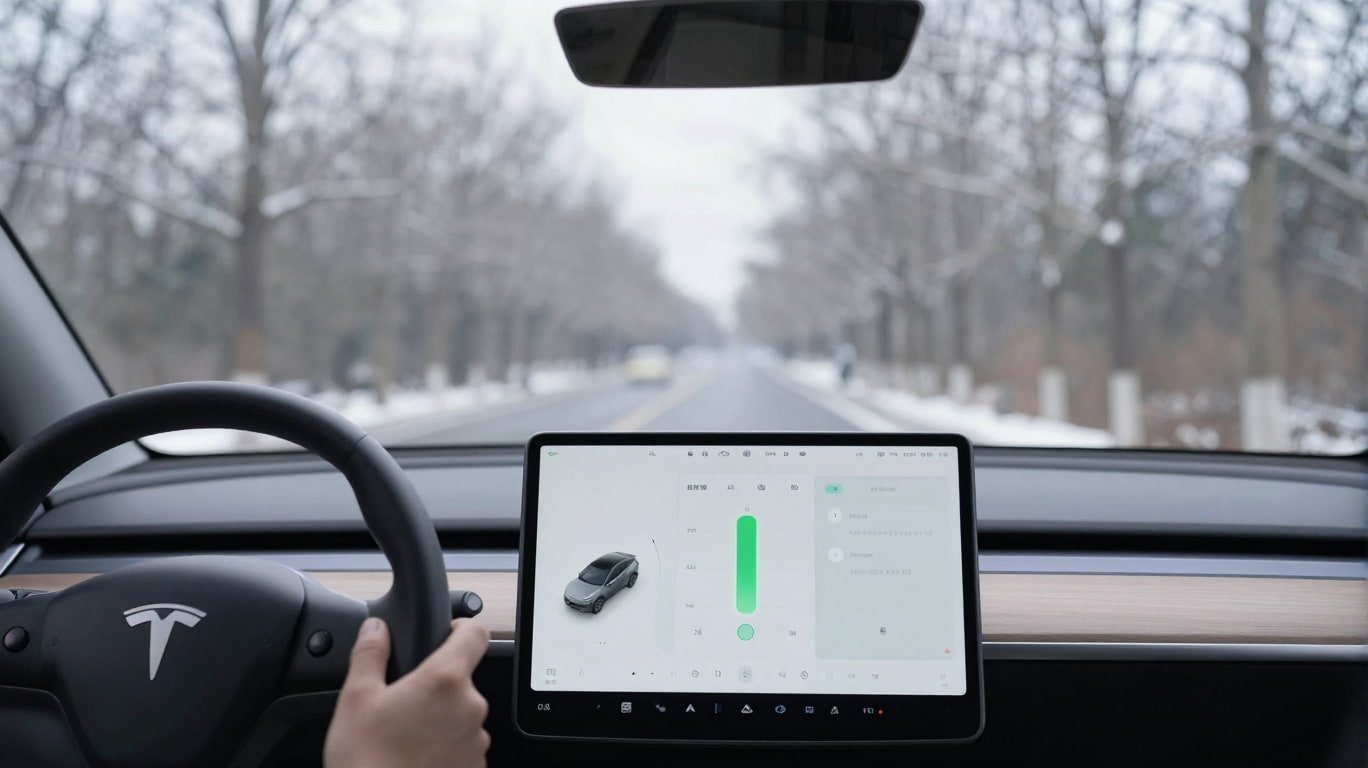
The most useful number to know is not the EPA rating on the window sticker. It is the real-world cold-weather percentage. In freezing temperatures, most electric vehicles lose somewhere between twenty and thirty percent of their warm-weather range. A car that easily covers two hundred fifty miles in mild spring weather might deliver one hundred eighty to two hundred miles on a January morning.
The loss is not constant. The worst hit comes on short trips where the cabin heater has to warm up a cold interior from scratch. Once the cabin is warm and the battery has reached its operating temperature, the efficiency improves. On a long highway drive, the range penalty is smaller in percentage terms because the initial warm-up cost is spread across more miles.
The table below shows how different driving patterns affect winter range loss.
Driving pattern | Winter range loss | Why |
|---|---|---|
Multiple short trips with cold starts | Highest — 25 to 35 percent | Heater runs hard to warm cabin each time, battery never reaches optimal temperature |
Single long highway drive | Moderate — 15 to 25 percent | Initial warm-up cost spread across many miles, steady-speed driving is efficient |
Preconditioned while plugged in | Lower — 10 to 20 percent | Cabin and battery warmed using grid power before departure |
Stop-and-go city driving with preconditioning | Moderate — 15 to 25 percent | Regenerative braking helps, but heater draw still present |
What the heater does to your battery
The biggest energy draw in cold weather is not the cold itself. It is the cabin heater. A gasoline car produces abundant waste heat from its engine and uses that heat to warm the cabin for free, from an efficiency standpoint. An electric motor produces very little waste heat, so the car must generate warmth electrically. That electricity comes from the same battery that powers the wheels.
Running the cabin heater at full output on a very cold day can draw several kilowatts of power. Over the course of an hour of driving, that draw adds up to a noticeable chunk of the total battery capacity. This is why short trips are so costly: the heater is working hardest during the first ten or fifteen minutes when the cabin is coldest, and on a short trip, that warm-up energy represents a large fraction of the total energy used.
The workaround is preconditioning. Most EVs allow you to set a departure schedule through a phone app or the car's infotainment system. While the car is still plugged in, it warms the cabin and conditions the battery using electricity from the grid rather than the battery. You walk out to a warm car with a full charge. The heater still draws power during the drive, but it is maintaining an already-warm cabin, not heating a frozen one from scratch. Preconditioning is the single most effective winter habit an EV owner can adopt.
Charging in the cold: slower but still works
Cold weather also affects charging speed. A cold battery cannot accept a charge as quickly as a warm one. If you plug into a DC fast charger after the car has been sitting outside in freezing temperatures, the charging session will start slowly until the battery warms up. Some EVs include battery preconditioning — automatically warming the battery as you approach a charger entered into the navigation system — which mitigates this delay.
Home charging on a Level 2 charger is less affected by cold because the power levels are lower. The car will still charge overnight, though it may spend some of the initial energy warming the battery rather than storing it as range. The practical result is that a full charge might take slightly longer, but since it happens while you sleep, the difference is invisible.
Winter road trips: the planning margin
The combination of reduced range and slower charging changes the math on winter road trips. A route that requires two charging stops in July might need three in January. The stops themselves might be slightly longer because the battery charges more slowly when cold.
The adjustments are not complicated, but they require honesty. Plan for shorter driving segments between charges. Build a larger buffer into your arrival estimates. Know where the backup chargers are along your route, because a station that is occupied or broken in winter leaves you with fewer alternatives than one in summer.
Families who travel in winter learn to treat the extra charging stop as a warm-up break. A travel center with indoor seating and hot drinks turns a necessary delay into something closer to a rest stop. The car charges. The kids warm up. Nobody is miserable.
The second winter is easier than the first
Owen's experience, echoed by many readers, is that winter EV anxiety peaks in the first season and largely disappears by the second. The first winter is spent watching the range estimate, testing the heater's effect, and nervously calculating whether there is enough charge to reach the next charger. The second winter is spent preconditioning the cabin, plugging in a little more often, and trusting the car to do what it has done before.
The battery does not degrade faster in winter. The reduced range is a temporary efficiency loss, not permanent damage. When spring arrives, the range returns. The car is fine. You are fine. And the following November, you will know exactly what to expect.