Most electric vehicle reviews focus on what happens during the first drive: the instant acceleration, the quiet cabin, the regenerative braking that feels strange for the first ten minutes. Owen Barrett cares more about what happens after the first three months, when the novelty wears off and the car is just the car.
Some things genuinely get easier. Other things do not change at all, or change in ways that are more complicated than the brochure suggests. Here is what to expect once the honeymoon ends and the routine begins.
What gets easier: the things nobody talks about
The first surprise for many new EV owners is not the driving experience. It is the disappearance of several small, recurring annoyances that gasoline-car life normalizes.
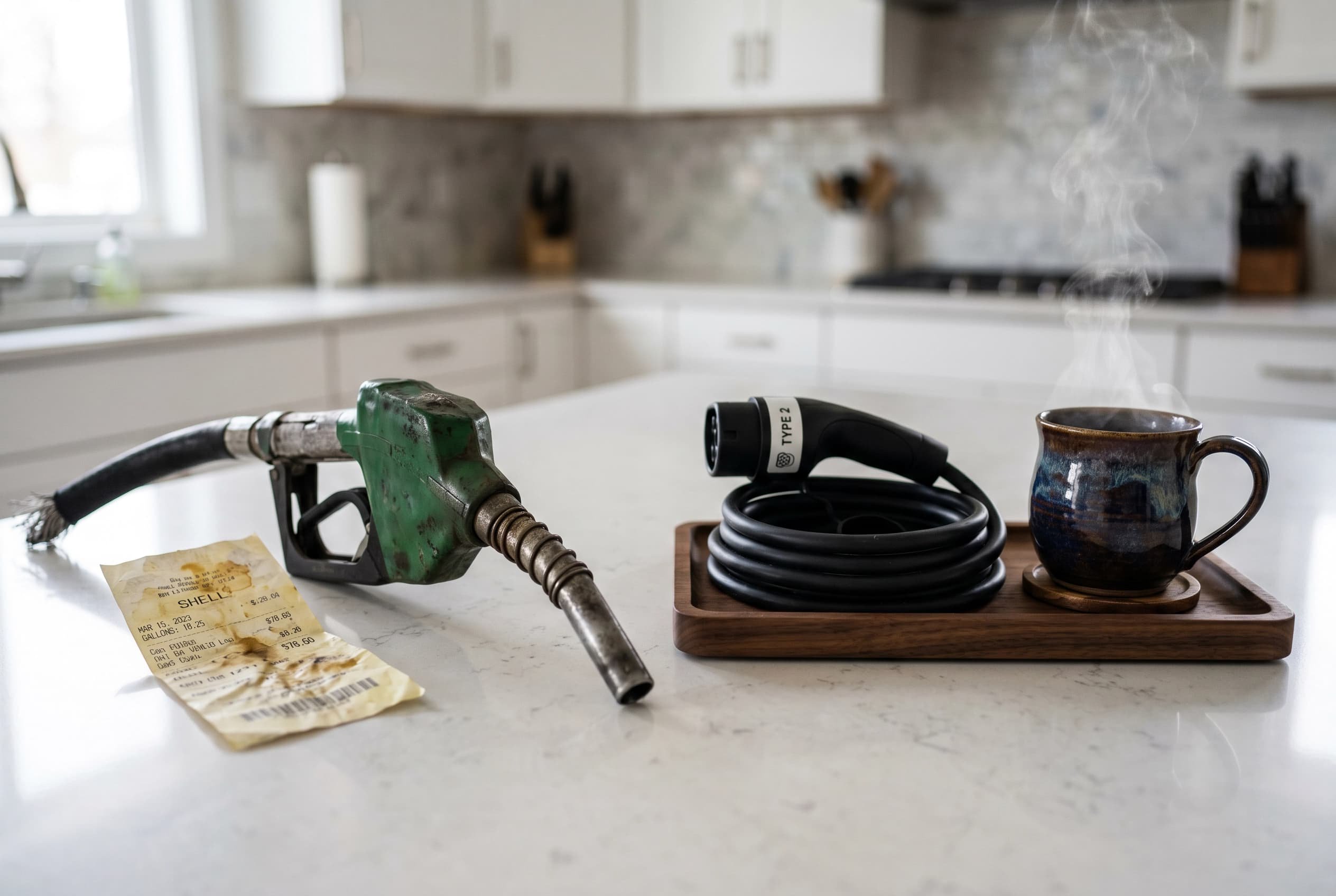
Stopping for gas vanishes from your weekly to-do list. This sounds obvious on paper, but the lived experience is different from the expectation. You do not just save the money. You save the five-minute detour, the smell of gasoline on your hands, the mental note to leave early because the tank is low. For a driver who charges at home, the car refuels while you sleep. You wake up every morning with a full battery, or at least enough range for the day ahead. That small consistency removes a surprising amount of background stress from the week.
Cold mornings also improve in a way that does not show up on a spec sheet. Because an EV does not have an engine that needs to warm up before the cabin heat works, the interior starts warming within seconds. Many models allow you to precondition the cabin from a phone app while the car is still plugged in, so you walk out to a warm car without draining the battery. It is a modest quality-of-life upgrade that becomes hard to give up once you have lived with it through one winter.
Maintenance drops off noticeably. No oil changes, no transmission fluid, no spark plugs, no serpentine belt. Brake pads last far longer because regenerative braking handles much of the deceleration. The maintenance schedule for the first several years consists mostly of tire rotations, cabin air filters, and wiper blades. For a busy adult who already has enough appointments to manage, losing the oil-change reminder from the dashboard is a genuine relief.
The table below compares weekly and seasonal routines before and after switching to an EV with home charging.
Task | Gasoline car routine | EV routine with home charging |
|---|---|---|
Refueling | Weekly detour to a gas station, often during a busy day | Plug in at night; start each day with a full battery |
Cold-weather warmup | Idle the engine or drive cold for several minutes | Cabin warms quickly; precondition via app while plugged in |
Routine maintenance visits | Oil change every few months, plus belts, fluids, spark plugs | Tire rotation, wiper blades, cabin filter — far fewer trips |
Brake wear | Regular pad and rotor replacement | Pads last significantly longer due to regenerative braking |
What does not get easier: the persistent frictions
Honesty matters here. EV ownership does not erase every inconvenience from your transportation life, and some things remain exactly as annoying as they were before — or introduce new frustrations.
Road trips still require planning. A gasoline car can refuel almost anywhere in five minutes. An EV road trip, especially one that crosses rural areas or less-developed charging corridors, still asks you to think about where the next working fast charger is and whether you have a backup option. The infrastructure has improved significantly by 2026, but it is not yet as mindless as the gasoline station network. If you take long trips frequently, this remains a meaningful tradeoff.
Public charging reliability is better than it was five years ago, but it is not perfect. A charging station might be occupied when you arrive, or it might have one out of four units down for maintenance. Most of the time, things work. When they do not, the inconvenience is sharper than a gas station closure because chargers are fewer and farther between. Experience teaches you which stations in your area are dependable and which are perpetually half-functional, but that knowledge takes time to build.
Winter range reduction is real and it does not go away. Cold weather reduces the chemical efficiency of the battery, and running the cabin heater draws additional energy. A car rated for two hundred fifty miles of range might deliver one hundred eighty to two hundred miles on a very cold day. This is manageable for daily commuting, but it changes the math on longer winter drives. The car warns you about reduced range, and after a season or two you learn to trust your own experience over the EPA estimate.
The table below separates what improves from what stays challenging.
What gets easier | What does not get easier |
|---|---|
No more gas station stops in daily life | Road trips still require charging-stop strategy |
Cabin heat arrives almost instantly | Cold weather reduces usable range noticeably |
Far fewer routine maintenance appointments | Public charger reliability remains inconsistent |
Waking up to a full battery each morning | Charging away from home costs more than residential electricity |
What surprises people: the quiet shifts
Beyond the obvious pros and cons, there are quieter changes that first-time owners notice but rarely see mentioned in reviews.
The car feels different on the highway not because of the motor, but because of the weight. EVs are heavy, and that weight sits low in the chassis. The result is a planted, stable feel at speed that makes long highway stretches less fatiguing. You notice it most after three or four hours behind the wheel, when you arrive less tired than you expected.
The garage smells different. There is no gasoline residue, no exhaust film on the walls, no faint odor of hot oil after a long drive. For a household where the garage also serves as storage or a workspace, this small change makes the space more pleasant to use.
Your driving style changes in ways you do not plan. Regenerative braking encourages smoother deceleration, which over time makes you a more patient driver. You start coasting earlier before stoplights. You pay more attention to traffic flow because maximizing efficiency becomes a quiet game. It is not a personality change, but it is a subtle recalibration of how you move through traffic.
The ninety-day test
Owen has a simple benchmark for new owners. After ninety days, ask yourself two questions. First, has the car made your normal weekday easier or harder? Second, do you think about charging more or less than you did in the first month?
If your answers are "easier" and "less," the car has passed the only test that matters. If you are still anxious about range on routine days or frustrated by the charging logistics, the fit may not be right — and that is worth knowing before you sink more years and miles into the vehicle.
Good ownership is mostly routine. The best EV is the one that fades into the background of your life, not the one that keeps demanding your attention. For most people, that happens around the three-month mark. If it has not happened by then, it might be the car, or it might be that the infrastructure around you is not yet ready. Either way, you will know.