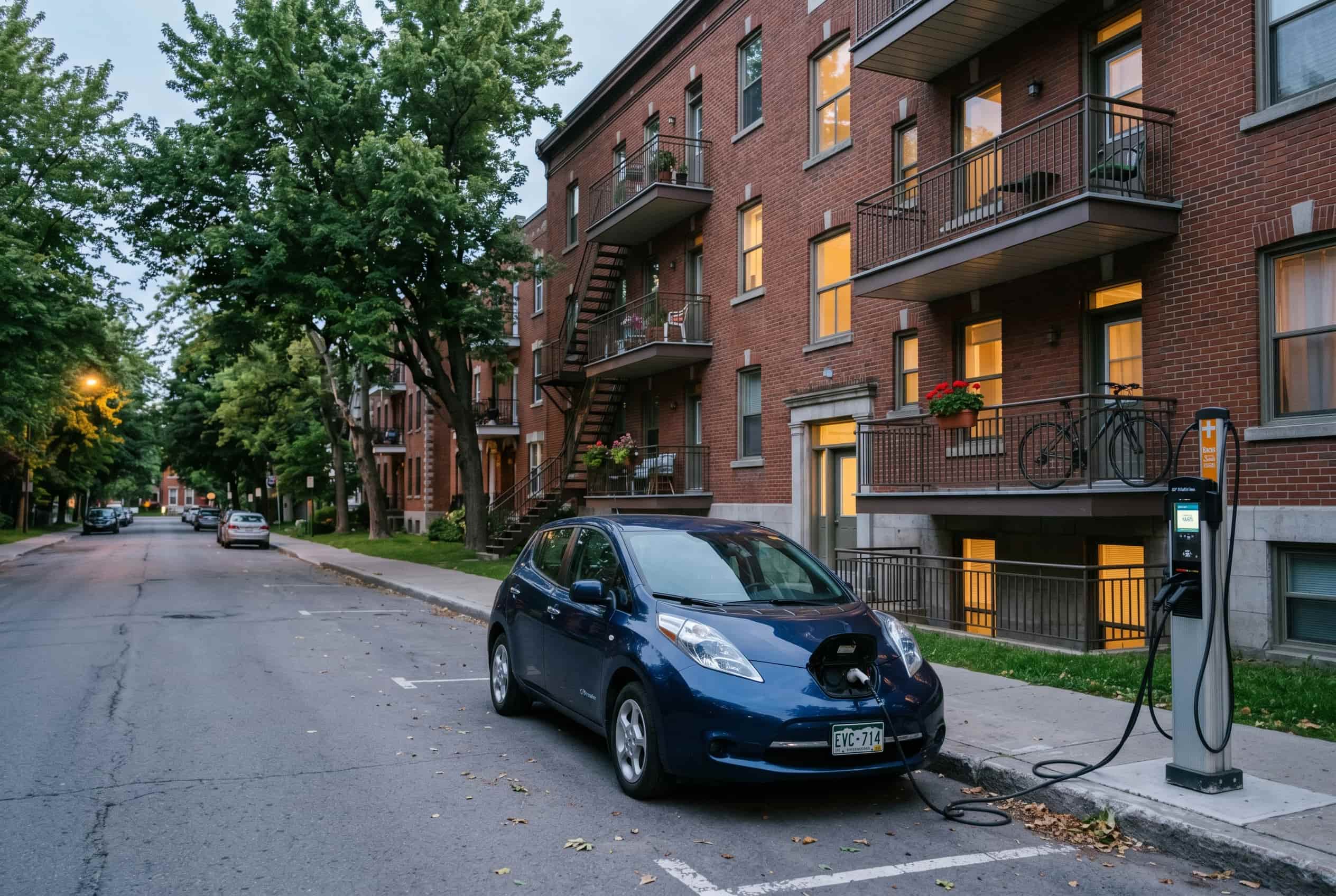
The standard advice for electric vehicle ownership assumes you have a garage. Plug in at night. Wake up to a full battery. Never think about it again.
For roughly a third of Americans who rent their homes, that advice is irrelevant. If you live in an apartment building without dedicated parking or charging infrastructure, the EV ownership equation changes completely. Owen Barrett hears from readers in this situation more than any other single group. The question is always some version of: "Can I make this work, or am I going to regret it?"
The answer is not yes or no. It is a checklist of conditions that tilt the experience toward fine, frustrating, or dealbreaker. Here is how to know which camp you are in before you sign anything.
The three tiers of apartment charging
Not all apartment charging situations are equal. They fall into three broad tiers that make the difference between an EV that fits your life and one that makes every week harder.
The first tier is buildings with dedicated on-site charging. A growing number of apartment complexes in 2026 have installed Level 2 chargers in their parking areas, either assigned to specific residents or shared on a first-come basis. This is the closest an apartment dweller gets to the home-charging experience. You plug in overnight. You pay either through the charging network or through a building billing system. The convenience is high, though the cost per kilowatt-hour is typically higher than a residential utility rate. If your building has this, an EV is genuinely practical.
The second tier is buildings without on-site chargers but with reliable public charging within walking distance. A Level 2 charger at a nearby grocery store, library, or public parking garage can serve as your de facto home charger if you are willing to build your weekly errands around it. This requires more planning than dedicated on-site charging, but it is manageable for drivers with predictable schedules and moderate daily mileage.
The third tier is buildings without on-site charging and without reliable public chargers nearby. In this scenario, you depend entirely on DC fast charging stations that may be miles from your apartment. Every charge becomes a dedicated trip rather than something that happens during your regular routine. This is where apartment EV ownership becomes genuinely difficult, and for many people, it crosses the line into dealbreaker territory.
The table below summarizes what life looks like in each tier.
Tier | Charging access | Weekly routine | Verdict |
|---|---|---|---|
On-site Level 2 charging at your building | Plug in overnight in your assigned or shared spot | Minimal effort; close to home-charging convenience | Fine — and genuinely practical |
No on-site charging, but public Level 2 within walking distance | Charge during grocery runs, errands, or weekend downtime | Requires planning but overlaps with existing activities | Manageable with the right habits |
No on-site charging, nearest public charger is a drive away | Rely entirely on DC fast charging; dedicated trips required | Charging becomes a standalone weekly chore | Frustrating to dealbreaker depending on patience |
What to check before you sign a lease or buy the car
If you are apartment hunting and want an EV to work, or if you already live in an apartment and are considering buying one, Owen recommends investigating four things before making any commitments.
First, talk to your building management about charging. Do not assume they are hostile to it. Some property managers have already been asked by other residents and are waiting for enough interest before installing chargers. Others have not thought about it at all and may be receptive. The conversation is more productive if you come with information: there are incentives available in many states for multifamily charging installations, and adding EV charging can be a marketing advantage for the building. If the answer is a flat no, at least you know.
Second, map the public chargers near your apartment. Look not just at how many there are, but what kind. Level 2 chargers near places you already go are far more useful than a fast charger ten miles away. Check reviews and recent check-ins on charging apps to see whether the stations near you are reliably functional. A charger that shows up on a map but has been reported broken for three weeks is not a charger you can depend on.
Third, check whether your workplace offers charging. For apartment dwellers, workplace charging can singlehandedly solve the access problem. If you can plug in during your workday, your apartment's lack of charging becomes almost irrelevant. This is the single biggest factor that moves someone from the frustrating tier to the fine tier.
Fourth, be realistic about your weekly mileage. If you drive twenty miles a day and only need to charge once a week, a public Level 2 session during your Saturday grocery run may cover you entirely. If you drive sixty miles a day, you will need to charge far more frequently, and the inconvenience multiplies.
The winter factor for apartment dwellers
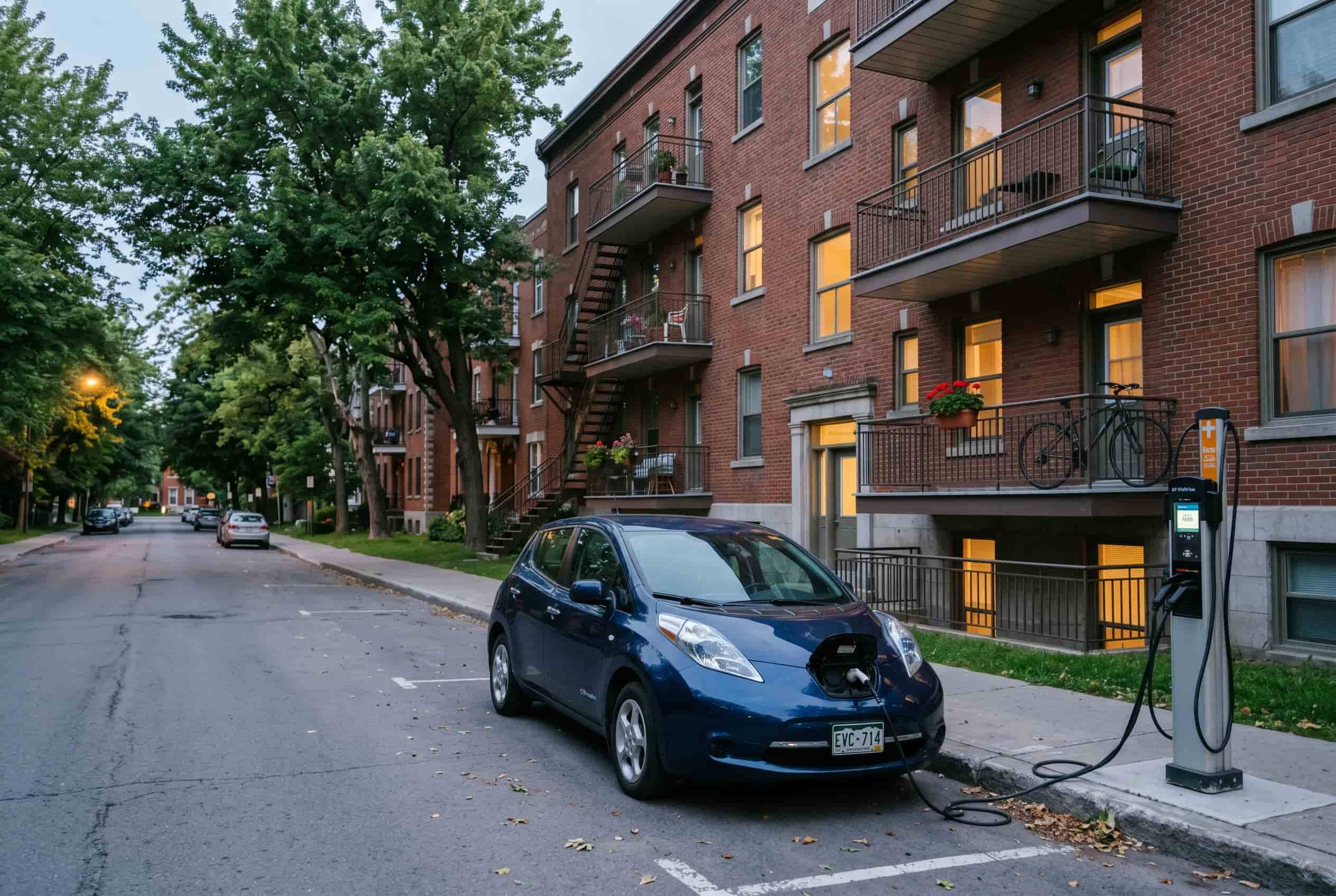
Cold weather makes apartment EV life harder in a specific way. A driver with a garage plugs in overnight and preconditions the cabin while connected to grid power. An apartment dweller who parks on the street or in an unheated lot walks out to a cold car that has been losing range overnight to battery thermal management.
The range loss from cold weather is not unique to apartment dwellers, but the inconvenience of it is. Without a plug at home, you cannot precondition without using battery power. You cannot top up overnight to compensate for the reduced efficiency. Every winter mile costs slightly more of your total range, and your charging stops are slightly more frequent.
This is not a dealbreaker by itself, but it is a factor worth weighing honestly. If you live in a cold climate and lack both home and workplace charging, an EV will demand more of your time and attention from November through March. Some people are fine with that. Others find it wears them down by February.
When the answer is "not yet"
There is no shame in deciding that an apartment EV does not fit your life right now. Owen has told readers exactly that on multiple occasions, and it is one of the reasons this site exists — to give honest answers, not cheerleading.
An EV is a tool. A tool that makes your week harder instead of easier is the wrong tool, regardless of how advanced its technology is. If your apartment situation falls into the frustrating tier and your workplace does not offer charging, waiting is a perfectly rational decision. The charging infrastructure is improving. Your next apartment may have on-site chargers. The used EV market will be even more mature in two years.
A car earns its place in the household. If it cannot earn it from an apartment parking spot, the right move is to wait until it can.

What actually works
For apartment dwellers who decide to go ahead, the most successful approach is to stop treating charging like refueling and start treating it like laundry. You do not wait until you have no clean clothes to do a load. You do it on a schedule, during a window that fits your week.
The same logic applies to public charging. Pick a standing session — Sunday morning at the grocery store, Wednesday evening at the library, Friday afternoon after work — and treat it as a fixed part of your routine. The people who adapt best to apartment EV life are not the ones with the longest-range cars. They are the ones who stop seeing charging as an interruption and start seeing it as a background rhythm.
Good ownership is mostly routine. Even without a garage, a routine can take root. It just takes more intention to plant it.