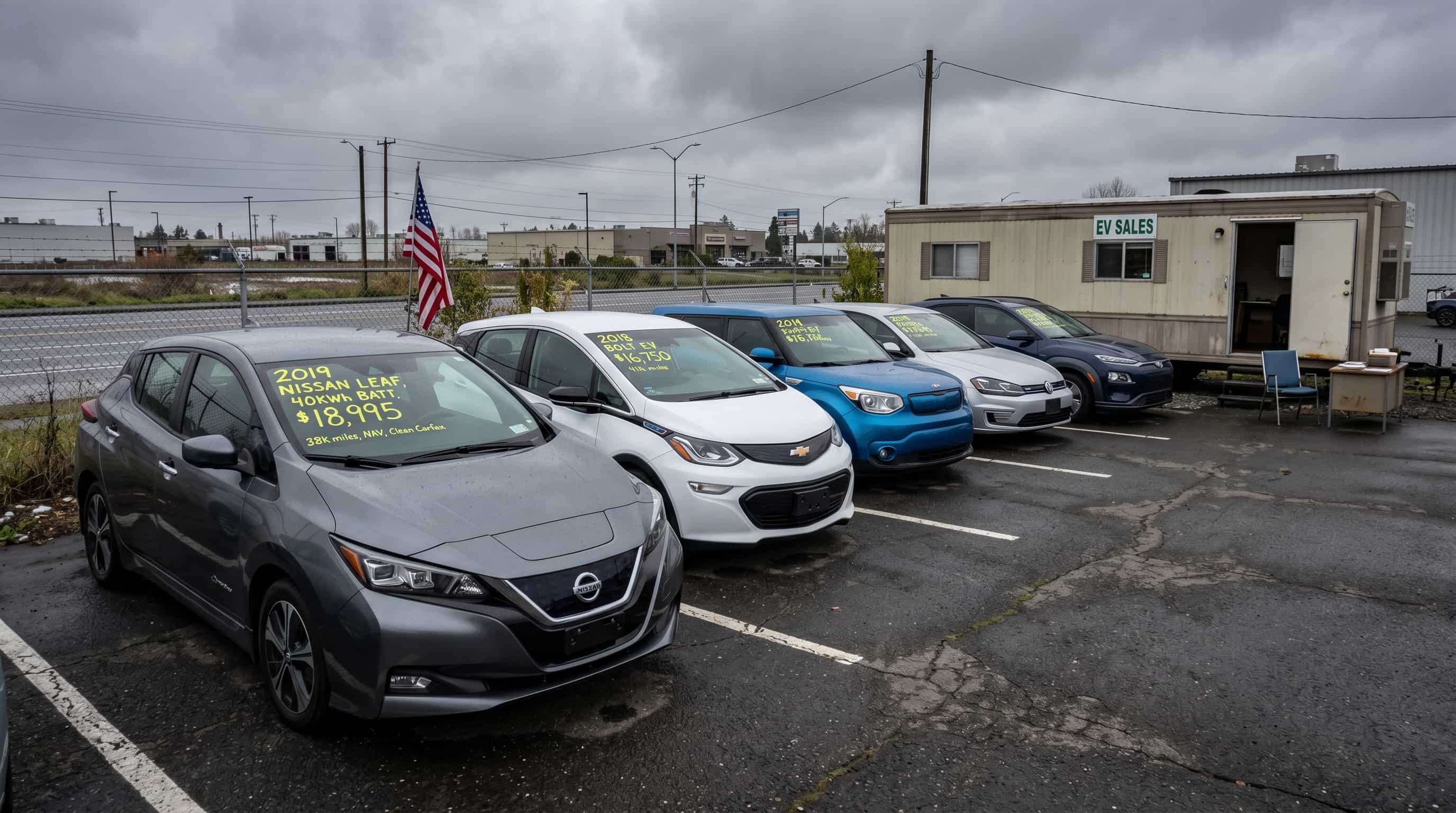
The used EV market in 2026 is bigger, cheaper, and more complicated than most buyers expect. Three-year-old electric cars are selling for significantly less than their original sticker prices. Some of those cars have barely thirty thousand miles on them and plenty of useful life left. Others have batteries that have been quietly degraded by years of fast charging in hot climates, and the price discount is not a bargain — it is a warning.
Owen Barrett has helped enough readers navigate used EV purchases to know that the line between a smart buy and an expensive gamble is thinner than it looks. Here is where that line falls and how to stay on the right side of it.
Why used EVs are suddenly affordable
The price drop on used electric cars has been one of the biggest stories in the American auto market over the past two years. Several forces have converged to push prices down.
The federal used EV tax credit, which offers a point-of-sale credit on qualifying vehicles sold by dealerships, has effectively capped what many buyers are willing to pay. Technology has moved fast, making three-year-old cars feel older than three-year-old gasoline cars do. And early adopters who leased EVs are now returning them in large numbers, flooding the market with supply at the same time that some buyers remain hesitant about used battery life.
The result is a market where a three-year-old EV with modest mileage can be purchased for roughly half of its original price. For a buyer who understands the risks and knows what to inspect, that is a genuine opportunity. For a buyer who treats a used EV purchase like a used Camry purchase, it is a trap.
The only number that really matters
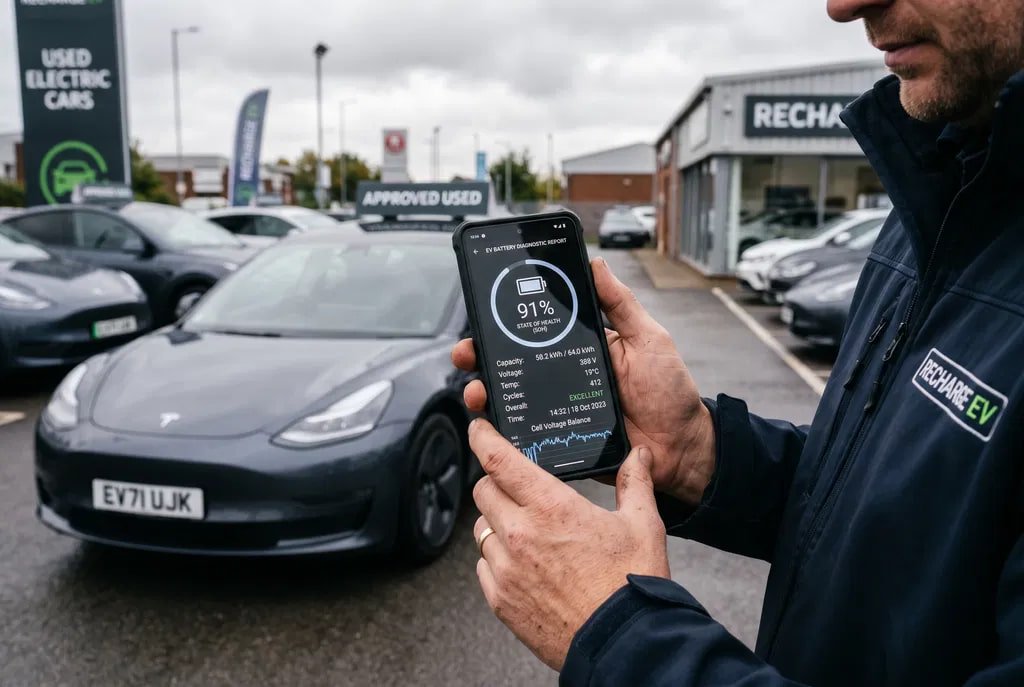
The single most important piece of information in any used EV purchase is the battery state of health. This is a percentage that represents how much of the battery's original capacity remains. A new car leaves the factory at one hundred percent. A three-year-old car that was charged mostly at home in a moderate climate might still be at ninety-two or ninety-three percent. A three-year-old car that was fast-charged daily in Phoenix might be at eighty-three percent and declining.
The difference between those two numbers is not academic. It translates directly into how far the car can travel on a full charge and how quickly it will lose range in the years ahead. A car with a degraded battery is not necessarily worthless, but it is worth less — possibly much less — than a comparable car with a healthy battery.
Most private sellers will not volunteer a battery state-of-health reading because they do not have one to offer. Some dealerships will provide one if asked. Independent EV specialty shops can perform a battery health check for a reasonable fee, and that fee is the best money a used EV buyer can spend. A hundred-dollar inspection that reveals a degraded battery can save thousands in regret.
Remaining warranty is a timeline, not a guarantee
Most electric vehicles sold in the United States come with a federally mandated battery warranty of eight years or one hundred thousand miles, whichever comes first. For a three-year-old used EV, that means roughly five years of coverage remain — in theory.
In practice, battery warranties cover defects and catastrophic failure, not gradual capacity loss. If your used EV battery drops to eighty percent capacity after four years, that is normal degradation and generally not covered. If it drops to sixty percent, that is a warranty claim worth pursuing. Reading the fine print on the specific manufacturer's warranty before purchasing is not optional.
Beyond the battery warranty, check whether the comprehensive bumper-to-bumper warranty is still active. Many expire after three or four years, and a car just past that threshold can surprise a new owner with uncovered repair costs for non-battery components like the infotainment system, power windows, or climate control. These repairs are not EV-specific, but they are expensive enough to change the ownership math.
Charging history: the question nobody asks but everyone should
A used gasoline car comes with an odometer reading and maybe a Carfax report. A used EV should come with a charging history — or at least an honest answer about how it was charged.
Batteries that were predominantly charged on Level 2 home chargers age more slowly than batteries that were regularly fast-charged on DC chargers. The difference is not enormous over a year, but it compounds over three or four years. A former lease vehicle that spent its life as a commuter car charging overnight in a garage is a safer bet than a former rideshare vehicle that was fast-charged twice a day.
This information is not always easy to obtain. Some EVs store charging history in their onboard data and can produce a report. Others do not. When a direct history is unavailable, look for clues. A three-year-old car with fifty thousand miles and heavy wear on the driver's seat was probably driven hard. A three-year-old car with eighteen thousand miles and pristine interior condition was probably a second car charged gently at home.
The table below summarizes the key indicators to assess before buying.
Indicator | What it suggests | How to check |
|---|---|---|
Battery state of health above 90% on a 3-year-old car | Battery was treated well; good buy | Request a diagnostic report or pay for an independent inspection |
Battery state of health below 85% on a 3-year-old car | Heavy fast-charging or hot-climate use; proceed with caution | Factor replacement cost into your offer or walk away |
Low mileage with pristine interior | Likely a lightly used second car; gentler charging history | Check service records and Carfax for consistency |
High mileage with visible driver-seat wear | Possible commercial or rideshare use; fast-charging likely | Ask directly about previous use; verify with vehicle history report |
Remaining factory warranty of 2+ years | Cushion against unexpected major repairs | Confirm in-service date with manufacturer, not just the seller |
Where and when a used EV makes the most sense
A used EV is the strongest financial proposition for a specific kind of buyer: someone who drives a predictable number of miles per day, has access to home charging, and intends to keep the car for at least four or five years. Under those conditions, the math is compelling. The initial depreciation has been absorbed by the first owner. Fuel and maintenance savings begin immediately. The battery, if healthy, will still have years of useful life.
A used EV is less compelling for a buyer who relies on public fast charging, drives long distances regularly, or plans to sell the car again within two years. The resale value of an already-used EV will have declined further, and the savings window is too short to offset the transaction costs.
The tax credit sweetens the deal for qualifying buyers. A used EV purchased from a licensed dealer for under a certain price threshold may be eligible for a federal credit at the point of sale. This effectively reduces the purchase price immediately rather than requiring a tax filing wait. Not every used EV qualifies, and not every buyer meets the income requirements, but for those who do, the credit turns an already-discounted car into an even better deal.
The honest answer
Owen's guidance on used EVs is straightforward: they are a smart buy for the right buyer and a risk for everyone else.
If you are willing to do the homework — get the battery health reading, confirm the remaining warranty, ask about charging history, and accept that a used EV will not have the latest driver-assistance features — you can save thousands of dollars compared to buying new. If you would rather not think about any of those things, a new EV with a full warranty or a certified pre-owned vehicle with dealer-backed coverage is the safer path.
The question is not whether used EVs are good cars. Many of them are. The question is whether a used EV fits your tolerance for the unknowns that come with a second-owner battery. Answer that honestly, and the decision becomes much simpler.