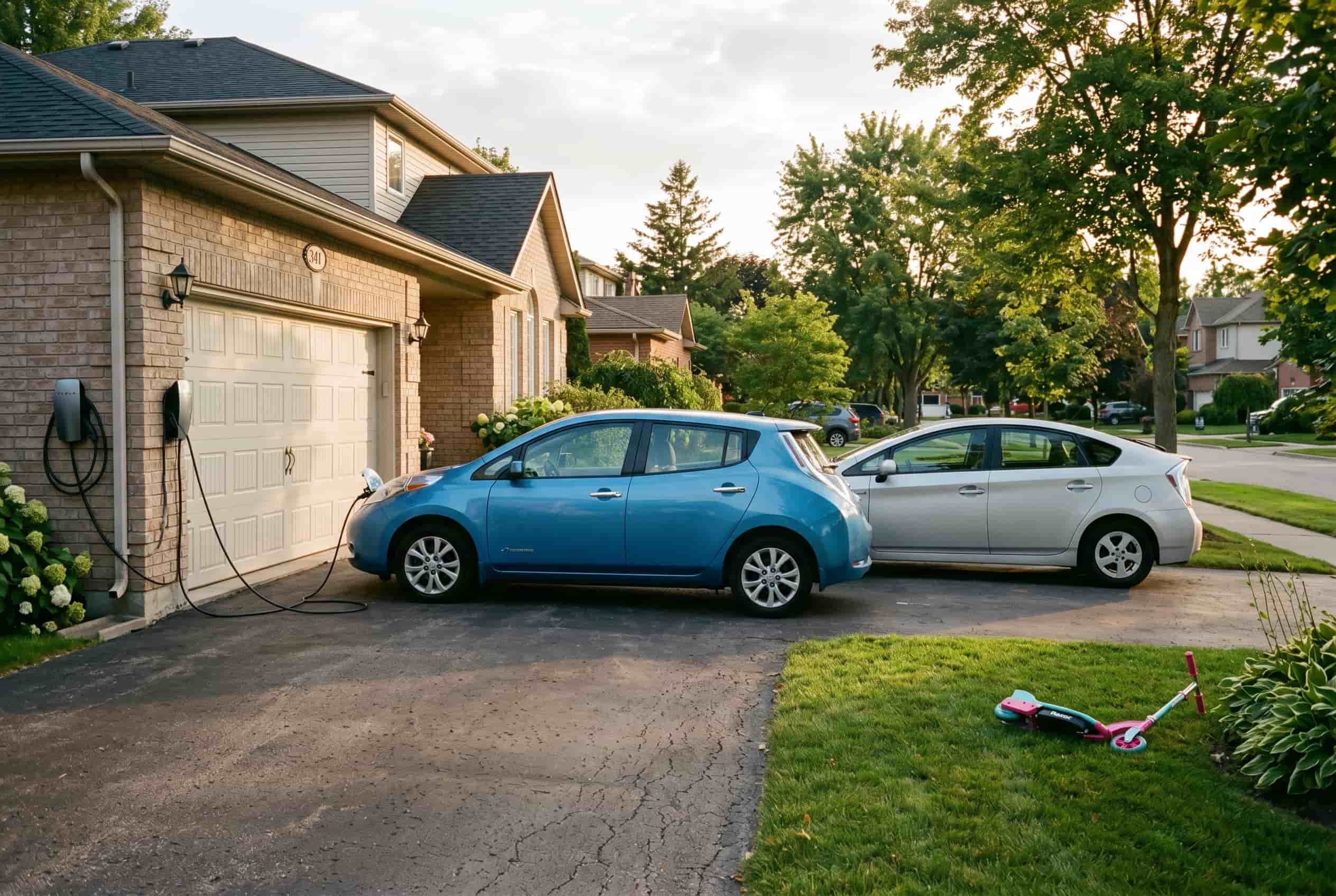
The conversation about hybrids and electric vehicles is often framed as a battle. One side argues that anything short of a full battery-electric car is a half-measure. The other side insists that hybrids are the only practical choice for real Americans with real lives.
Owen Barrett has no stake in either side. He has recommended both, depending on who was asking and what their Tuesday looked like. A car is a tool, and the right tool depends on the job. For some households, a hybrid is the smarter fit. For others, an EV is the obvious answer. The trick is knowing which household you are.
The practical difference that actually matters
The core difference between a hybrid and an EV is not environmental. It is not even primarily financial, though cost plays a role. The core difference is how each car asks you to think about refueling.
A hybrid asks nothing new of you. You stop at gas stations exactly as you always have. The car handles the interplay between gasoline and electric power on its own. You drive it like any other car, and the efficiency gains happen automatically in the background. The fuel savings are real but incremental. A hybrid might cut your gasoline bill by a third or half compared to a conventional car. It will not eliminate it.
An EV asks you to change one specific behavior: where and when you refuel. If you can charge at home, that change is mostly positive — you stop visiting gas stations entirely and wake up to a full battery. If you cannot charge at home, that change is more demanding, as earlier articles on this site have explored in detail. The fuel savings are larger than a hybrid's, but the lifestyle adjustment is larger too.
The table below lays out the practical differences across the dimensions that affect daily life.
Factor | Hybrid | EV with home charging | EV without home charging |
|---|---|---|---|
Refueling routine | Gas stations, unchanged | Plug in at home overnight | Public chargers, planned weekly |
Fuel cost reduction vs gas car | 30-50% | 60-80% on residential rates | 20-40% on public rates |
Maintenance | Similar to gas car, plus hybrid battery eventual replacement | Significantly less; no oil changes, fewer brake jobs | Same as EV with home charging |
Road trip refueling | Gas stations everywhere, five minutes | Requires route planning and 20-35 minute stops | Same as EV with home charging |
Upfront cost premium over gas car | Modest | Higher, but tax credits available | Same as EV with home charging |
Which household fits which car
The decision between a hybrid and an EV becomes clearer when you stop comparing the cars and start comparing the households.
A household that is a strong fit for an EV typically has a dedicated parking spot with access to an outlet or charger, drives a predictable number of miles each day within the car's range, and either keeps a second gasoline vehicle for long trips or takes road trips infrequently enough that planning charging stops is not a burden. This describes many suburban single-family homes with garages or driveways.
A household that is a stronger fit for a hybrid typically parks on the street or in an apartment lot without charging access, drives long distances regularly with unpredictable schedules, or simply does not want to think about refueling logistics beyond pulling into a gas station when the light comes on. This describes many renters, city dwellers without off-street parking, and families who take frequent rural road trips.
There is a large middle ground of households that could go either way. For them, the decision often comes down to a single factor: whether workplace charging is available. An apartment dweller whose office has chargers may find an EV entirely practical. A suburban homeowner whose daily commute is three miles may find a hybrid's simplicity more appealing than an EV's efficiency.
The two-car solution nobody talks about enough
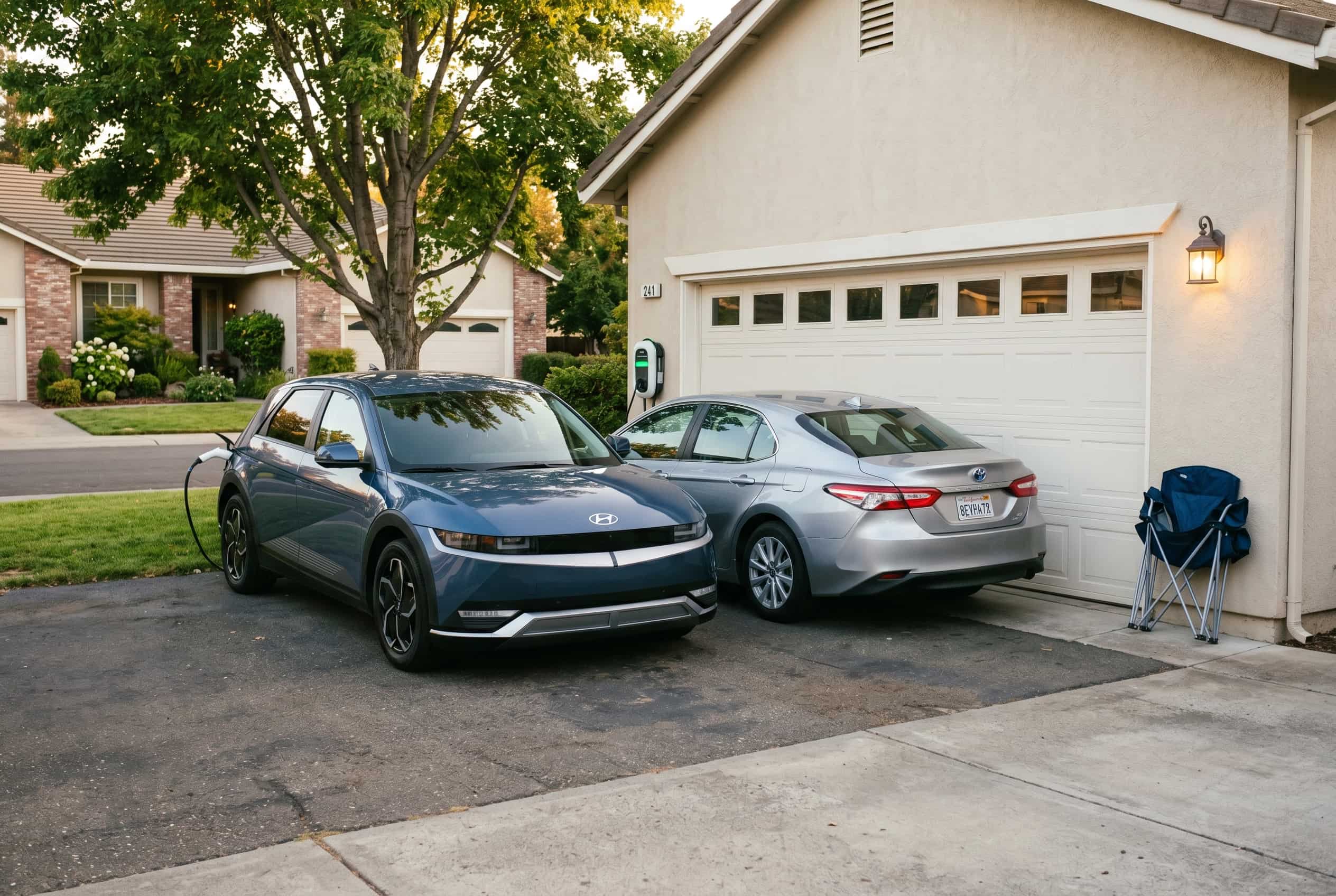
Many American households own two cars. That opens up a strategy that is rarely discussed in the partisan EV debate but is quietly popular among families who have made it work.
One car is electric. It handles the daily commuting, the school runs, the grocery trips, and the local errands. It charges at home overnight and never visits a gas station. The other car is a hybrid or a conventional gasoline vehicle. It handles the long road trips, the unpredictable schedules, and the situations where charging infrastructure is thin.
This arrangement captures most of the fuel savings and convenience of an EV without asking either driver to plan their life around a charging cable. The household's gasoline consumption drops significantly because the majority of miles are driven on electricity. But the flexibility of a gasoline or hybrid vehicle remains available for the trips where an EV would be a compromise.
The strategy is not available to every household. Single-car families have to choose one tool for all jobs. But for two-car households, the hybrid-versus-EV debate is often a false choice. The best answer might be both.
When the math tilts the decision
Cost is rarely the deciding factor between a hybrid and an EV for the simple reason that both save money over a conventional gasoline car, just in different amounts and with different payback periods.
A hybrid is cheaper to buy upfront than an EV. The price premium over a comparable gasoline car is modest, and you start saving on fuel from day one without buying or installing any charging equipment. The payback period is short and certain.
An EV with home charging saves more money over time, but the upfront costs are higher — even with tax credits — and the home charger adds expense. The payback period is longer but the lifetime savings are larger, especially if you drive above-average miles and keep the car for six years or more.
The table below summarizes the financial profiles of each choice for a typical household driving twelve thousand miles per year.
Financial factor | Hybrid | EV (home charging) |
|---|---|---|
Upfront cost vs comparable gas car | Small premium | Larger premium, partially offset by tax credit |
Annual fuel cost | Reduced by roughly one-third to one-half | Reduced by roughly two-thirds or more on residential rates |
Home equipment cost | None | Several hundred to a couple thousand for Level 2 installation |
Annual maintenance | Similar to gas, eventual hybrid battery replacement | Significantly lower than either gas or hybrid |
Break-even timeline | 2-3 years | 3-5 years depending on charger cost and electricity rates |
Best for | Low-mileage drivers, renters, road-trippers | High-mileage drivers, homeowners, long-term keepers |
The honest recommendation
Owen's answer to the hybrid-versus-EV question starts with a question of his own: what is your parking situation?
If you have a garage or driveway where you can install a charger, an EV will probably serve you well and save you more money over time. If you park on the street or in an apartment lot without charging, a hybrid is almost certainly the less stressful choice — and the fuel savings are still meaningful compared to a conventional car.
The question is not which technology is better. Technology matters. Habit matters more. The right car is the one that fits the parking spot you actually have, the schedule you actually keep, and the patience you actually possess for planning ahead. For some households, that car is a hybrid. For others, it is an EV. Both answers are reasonable. Both answers are adult.