If you're considering an electric vehicle, the first question that usually comes up is: how long does it take to charge an EV? It's a fair question, and the answer isn't a single number. Charging time varies based on the type of charger, your car's battery size, the weather, and even how empty the battery is. Let's break it down so you can plan your charging routine without any hype.
Level 1 Charging: The Slow and Steady Option
Level 1 charging uses a standard 120-volt household outlet. This is the charger that comes with most EVs, and it's the slowest method. Expect to add about 3 to 5 miles of range per hour. For a typical EV with a 60-kWh battery, a full charge could take over 40 hours. That's why Level 1 is best for plug-in hybrids (PHEVs) with smaller batteries, or for overnight top-ups if you drive very few miles daily. If you're asking how long does it take to charge an EV at home using a regular outlet, the answer is usually a couple of days for a full charge. Realistically, Level 1 is a backup, not a primary charging solution. For most drivers, the time commitment is simply too long for daily use.
Level 2 Charging: The Everyday Sweet Spot
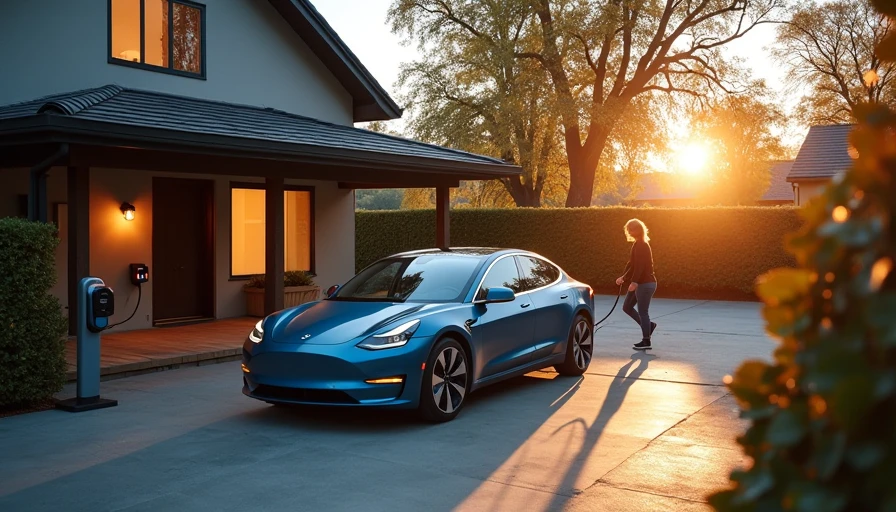
Level 2 charging uses a 240-volt outlet, similar to what a clothes dryer or oven uses. Most EV owners install a Level 2 charger at home, and it dramatically reduces charging time. A typical Level 2 charger adds 20 to 30 miles of range per hour. For a 60-kWh battery, a full charge takes about 6 to 8 hours — perfect for overnight charging. This is where the question "how long does it take to charge an EV" gets a practical answer: plug it in when you get home, and it's full by morning. Public Level 2 chargers (like those at shopping centers or workplaces) offer similar speeds, though sometimes at a lower power output. Installation costs vary, but many utilities offer rebates that offset the upfront expense.
DC Fast Charging: Road Trip Ready
When you need a quick boost on a long trip, DC fast charging (DCFC) is the answer. These high-power stations can charge an EV from 10% to 80% in roughly 20 to 40 minutes, depending on the car's maximum charging rate and the station's power output. Tesla's Supercharger network, for example, can deliver up to 250 kW, adding about 200 miles in 15 minutes for a compatible vehicle. Other networks like Electrify America and EVgo offer speeds up to 350 kW, though most current EVs can't accept that full rate. So if you're wondering how long does it take to charge an EV on a road trip, plan for about half an hour per stop — not as fast as a gas fill-up, but enough time for a bathroom break and coffee.
Charging Time vs. Gas: What's the Real Difference?
It's natural to compare EV charging to filling a gas tank. A gas stop takes 5 minutes, while a fast-charge stop takes 20-40 minutes. But the trade-off is that you charge at home overnight, so you rarely need to visit a public charger except on trips. For daily driving, the time you save by not going to a gas station can actually be a net gain. The real friction is on long-distance travel, where you have to plan stops around charging. Over a 500-mile road trip, you might spend an extra 40-60 minutes charging compared to a gas car. That's the honest trade-off.

Real-World Charging Times for Popular EVs
To give you a concrete idea, here are approximate times for a 10–80% charge on Level 2 and DC fast charging:
- **Tesla Model 3 LR (75 kWh):** Level 2: ~7 hours, DCFC: ~25 minutes (250 kW peak)
- **Chevrolet Bolt EUV (65 kWh):** Level 2: ~7 hours, DCFC: ~30 minutes (limited to 55 kW)
- **Ford Mustang Mach-E (88 kWh):** Level 2: ~8 hours, DCFC: ~38 minutes (150 kW peak)
- **Hyundai Ioniq 5 (77 kWh):** Level 2: ~7 hours, DCFC: ~18 minutes (350 kW capable)
These times assume ideal conditions. Cold weather can add 20–30% more time for fast charging, and using a lower-power Level 2 unit (e.g., 16 amps vs. 32 amps) will stretch the time. Always check your car's specific capabilities.
Factors That Affect Charging Speed
Several variables influence charging time:
- **Battery state of charge (SOC):** Charging from 10% to 80% is fast; the last 20% slows down significantly to protect battery health.
- **Temperature:** Batteries charge slower when cold. Preconditioning the battery (available in many EVs) helps mitigate this.
- **Charger power vs. car acceptance rate:** Your car can only charge as fast as its onboard charger allows on AC, or its peak DC rate. A 50 kW car on a 350 kW station still charges at 50 kW.
- **Concurrent usage:** Some public chargers split power when two cars are plugged in, reducing speed.
How to Estimate Your Own Charging Time
A simple formula: Battery capacity (kWh) / charging power (kW) = hours. But remember the efficiency loss and taper. For Level 2, multiply the charger's amps by voltage (240V) to get watts, then divide by 1000 for kW. For DC, use the station's output and your car's max rate. Most EVs have built-in trip planners that estimate charging stops, but a general rule of thumb is: Level 2 adds about 25 miles per hour, DCFC adds about 200 miles per half hour. Use an online calculator like A Better Routeplanner for more precision.
Bottom Line
The question "how long does it take to charge an EV" doesn't have a single answer, but for most daily driving, a home Level 2 charger will have you fully charged overnight. For longer trips, DC fast charging makes it manageable. The best EV is the one that fits your life without asking you to change your personality — and understanding charging times is a big part of that fit. Don't let charging speed scare you off; with a little planning, it becomes routine.