If you're shopping for an electric vehicle, you've probably wondered about the **home EV charger installation cost**. It's one of those numbers that feels slippery—every online estimate gives a different range, and you never know which line items are included. After installing my own Level 2 charger last year and talking to a few electricians who do this work daily, I can tell you that the real number lands somewhere between $500 and $2,500, with most homeowners spending around $1,200. But that range hides a lot of variables. Let’s walk through what actually drives the cost so you can budget with confidence.
What Factors Determine the Final Price?
The **home EV charger installation cost** isn’t a single price tag—it’s a bundle of decisions. The biggest variables are the distance from your electrical panel to where you want the charger, whether your panel has spare breaker slots and enough capacity, the type of charger you choose, and local labor rates plus permit fees. A straightforward install with a 240-volt outlet near the panel might run $500–$800. A long cable run through a finished garage with a panel upgrade can easily hit $2,500 or more.
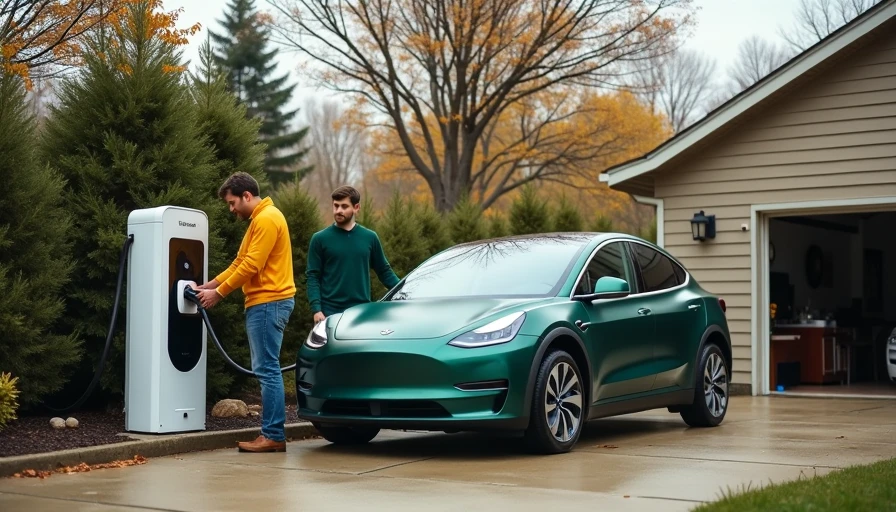
The Price of the Charger Itself: Equipment Costs
Before you figure labor, you have to pick a charger. Level 1 chargers that come with the car are free but painfully slow for daily use. Almost everyone wants a Level 2 unit. These range from about $300 for a basic model (no smart features) to $700 for a well-known brand like ChargePoint or Grizzl-E, and up to $1,200 for a Tesla Wall Connector or a high-end JuiceBox. The equipment is typically 30–60% of your total **home EV charger installation cost**. Don’t skip quality: a cheap charger that fails after two years costs more in the long run.
Electrical Panel Upgrades and Wiring: The Hidden Cost
This is where most surprises come from. Your panel might not have an open 240-volt breaker slot, or it may be an older 100-amp service that can’t handle a 50-amp charger plus your existing loads. Upgrading to 200-amp service runs $1,000–$3,000, sometimes more if the utility needs to trench to the street. And if your charger location is far from the panel, conduit and copper wire add up fast—$5–$10 per foot for material and labor. I’ve seen jobs where a 50-foot cable run added $700 alone. Always get an electrician to look at your panel before you commit to a charger.
Labor Costs and Permits: What You'll Pay an Electrician
Labor is the other big chunk. Licensed electricians charge $50–$150 per hour, and a typical install takes four to eight hours. That’s $200–$800. Permit fees add $50–$200 depending on your city. Some contractors bundle everything into a flat rate. Don't hire an unlicensed handyman—faulty wiring can burn down your garage, and insurance might not cover unpermitted work. A reputable installer should also handle the permit process, which ensures the work meets code. That peace of mind is worth the extra $100 or so.
Federal and State Incentives: How to Lower Your Out-of-Pocket
Here’s the good news: the Inflation Reduction Act offers a federal tax credit covering 30% of your total **home EV charger installation cost**, up to $1,000. So if your install costs $1,200, you get $360 back on next year’s taxes. Many states and utilities also offer rebates. For example, California’s Clean Vehicle Rebate Project doesn’t cover chargers, but some utilities like PG&E give $100–$500. North Carolina, where I live, has nothing state-level, but Duke Energy offers a $250 rebate. Check the Database of State Incentives for Renewables & Efficiency (DSIRE) for your area. These incentives can knock 30–50% off your net cost.
DIY vs Professional Installation: Is It Worth It?
If you’re handy with electrical work and your panel has an open slot, you might be tempted to install a NEMA 14-50 outlet yourself. A DIY setup runs about $150–$300 for parts—breaker, outlet, wire, conduit. But unless you’re a licensed electrician, I’d strongly advise against it. Mistakes can cause fires, voids in home insurance, and even damage to your car’s charging system. Plus, many charger warranties require professional installation. The savings aren’t worth the risk. For most people, paying a pro $400–$1,000 for the full install is the smart move.
Frequently Asked Questions About Installation Costs
**Q: Does the charger type affect installation cost?** A: Yes. Smart chargers with Wi-Fi and load management may need additional wiring or a dedicated circuit, adding $100–$200 to your total **home EV charger installation cost**. Hardwired units generally cost a bit more than plug-in models.
**Q: Can I save money by scheduling during off-peak hours?** A: Some electricians offer lower rates for work done on weekends or slower months. Ask about seasonal discounts.
So what’s the realistic **home EV charger installation cost** for a typical homeowner? Plan on $1,000–$1,500 after rebates, assuming no panel upgrade needed. If you need a new panel, budget $2,500–$4,500 total. Spend $300–$500 on a solid hardwired charger, hire a licensed electrician, claim your tax credit, and you’ll be charging at home every night without breaking the bank.