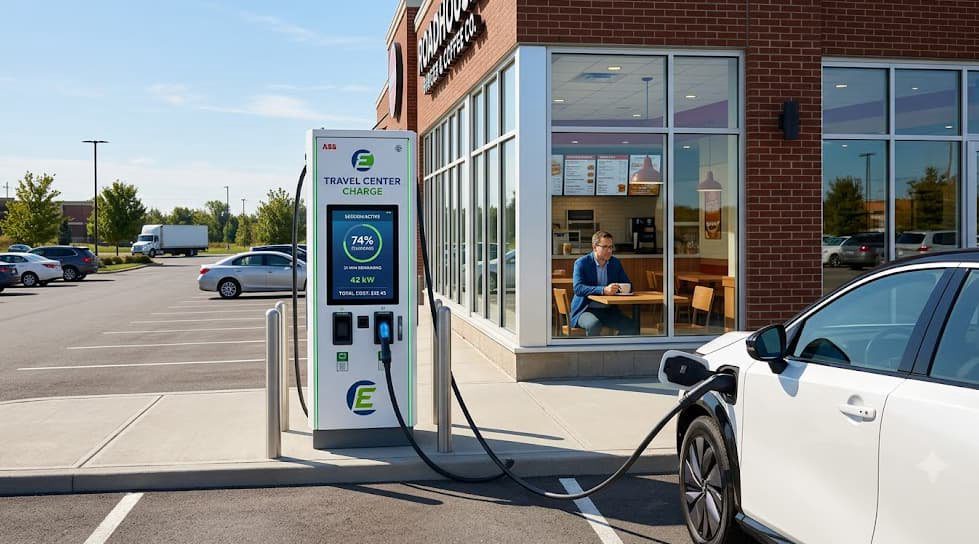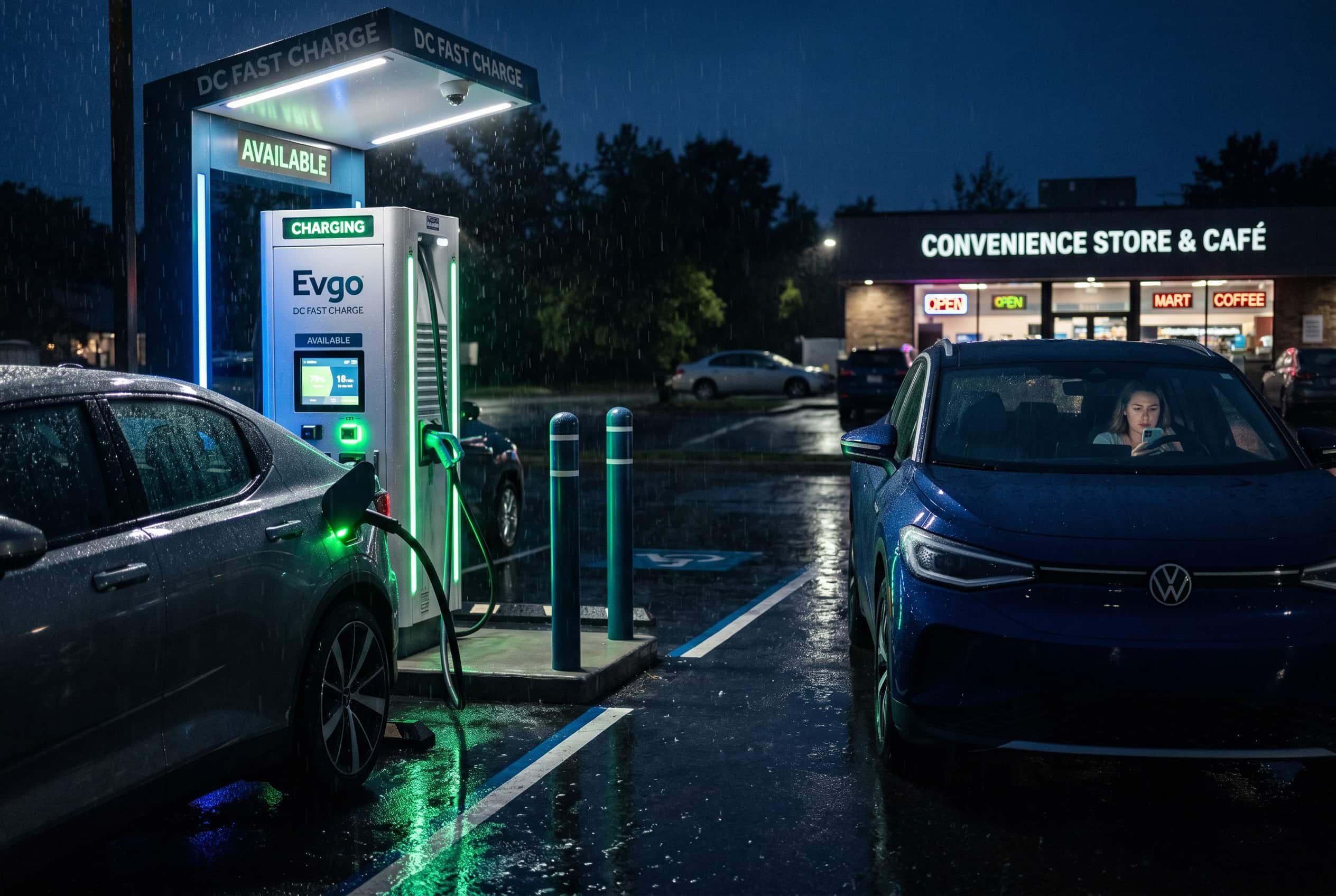
The reputation of public charging in America has improved a great deal since the early days of broken screens and incompatible connectors. It has not improved enough to be completely mindless, and that gap is where the frustration lives.
Owen Barrett has logged enough public charging sessions — successful, delayed, and occasionally abandoned — to recognize a pattern. The sessions that go wrong tend to share a common cause: the driver treated a public charger like a gas pump, assuming it would be available, functional, and fast without any effort before arrival. The sessions that go smoothly tend to share the opposite: a few minutes of homework done before leaving the house.
Public charging is not inherently bad. It is, however, a system that rewards planning and punishes optimism. Here is how to land on the right side of that equation.
The state of public charging in 2026
The public charging landscape looks meaningfully different than it did even three years ago. More stations are operational. More networks have adopted the same plug standard, reducing compatibility headaches. Payment systems are more reliable, and more chargers accept credit cards directly rather than requiring a proprietary app and a preloaded wallet balance.
The improvement is real but uneven. Major highway corridors are well served. Rural areas and some urban neighborhoods still have gaps. Reliability across networks has improved, but there is still a meaningful difference between the best operators — whose stations work almost every time — and the rest, where one out of four units might be down on any given day.
The practical takeaway is that public charging now works well enough that most trips can proceed without incident, provided you do not assume it works like a gas station. It does not. Gas stations have been ubiquitous and standardized for decades. Public charging is newer, thinner, and more variable. Treating it accordingly eliminates most of the grief.
Pre-trip checks that take five minutes and save hours
The single most effective habit for avoiding public charging frustration is so simple it feels almost too obvious to write down: check the charger before you drive to it.
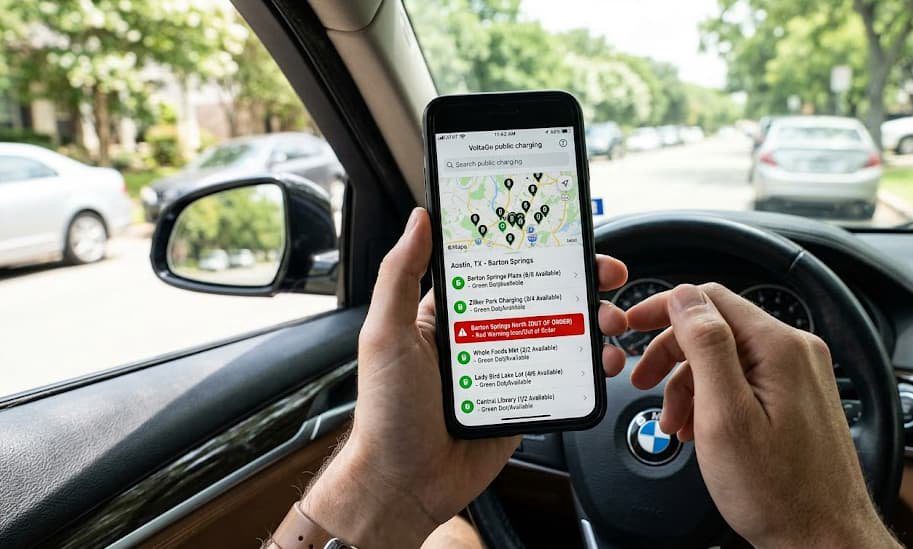
Most charging networks maintain live status information in their apps. You can see whether a station is operational, how many plugs are available, and sometimes whether a plug has been reported as broken. A driver who checks the app before departing knows whether the first-choice charger is available and whether a backup is needed. A driver who skips this step is gambling.
The second habit is to identify a backup charger near your primary stop. Not necessarily on the same route, but close enough that reaching it will not strand you. A charger that is three miles away and showing two available plugs turns a frustrating situation into a minor detour. A charger that is forty miles away and out of range turns it into a crisis.
The third habit is to check recent user reviews or check-in notes on apps like PlugShare. A station that shows as operational on the network app might have a damaged cable, a screen that is unreadable in sunlight, or a location that is difficult to access. Other drivers leave notes about these things. Reading them is free.
When it goes wrong anyway
Even with good preparation, things sometimes go wrong. A charger that was working yesterday is broken today. A station that was empty when you checked is occupied when you arrive. The payment system declines your card for no discernible reason.
The difference between a minor irritation and a genuinely stressful experience is having a backup plan that you already thought through. Owen keeps a short mental list for road trips: know where the next charger is, know how much range the car has in reserve, and do not wait until the battery is in single digits before starting to look for a charge. Arriving at a broken charger with twenty miles of range remaining is inconvenient. Arriving with five miles remaining is a problem.
The table below matches common public charging problems with the advance moves that prevent them from becoming emergencies.
What goes wrong | What you can do about it ahead of time |
|---|---|
Charger is occupied when you arrive | Check live availability in the app; know the location of a nearby alternative |
Charger is broken or offline | Read recent user reviews before departing; plan a backup stop within range |
Payment system rejects your card | Set up accounts on two major networks before the trip; carry a backup payment card |
Charging speed is slower than expected | Plan for conservative session durations; do not schedule tight connections around charging |
Station is poorly lit or feels unsafe | Check location photos and reviews during the day; prioritize stations at travel centers or well-trafficked areas |
The network loyalty trap
A mistake Owen sees regularly is drivers who commit to a single charging network because it is the one they used successfully one time. Then they plan a trip that forces them to use only that network, bypassing perfectly functional chargers from other operators because the app is not on their phone.
There is no advantage to network loyalty. The best charger for your route is the one that is working, available, and conveniently located. Download the apps for the two or three major networks that cover your region and set up accounts before you need them. The time to enter a credit card and create a password is not when you are standing in the rain at an unfamiliar charger with a tired child in the back seat.
The charging-session etiquette that keeps things moving
Public charging stations, especially fast chargers, are a shared resource. A small set of unwritten rules makes the experience better for everyone.
Do not occupy a fast charger longer than necessary. Once the car reaches eighty percent, the charging speed drops significantly, and the remaining twenty percent takes almost as long as the first sixty. If other drivers are waiting, it is courteous to unplug and move on rather than hold the stall for a full charge.
Do not unplug another driver's car without permission. Even if the session appears to be finished, it is not your cable to touch. Some networks notify owners when the session ends, and some cars have their own locking mechanisms.
Use the available tools to share information. If you arrive at a broken charger, report it through the app so the next driver does not repeat your experience. If a station is unusually busy, the same courtesy applies. Small acts of information-sharing make the system more reliable for everyone.
The honest verdict
Public charging in 2026 is not the disaster some critics describe. Most sessions work. Most drivers complete their trips without incident. The people who have the worst experiences are disproportionately those who did no advance work and assumed the infrastructure would meet them where they stood.
The gap between a smooth session and a frustrating one is often five minutes of app-checking and a willingness to accept that the perfect charger might be slightly less convenient than the one you planned for. That is not a high bar. For a driver who clears it, public charging fades into the background — a tool that works, with occasional exceptions, not a source of constant anxiety.