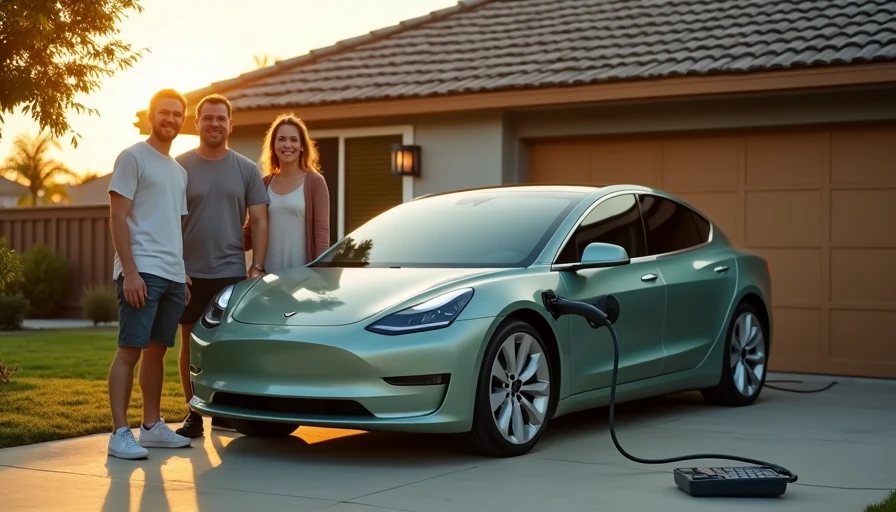
If you're shopping for a new car and wondering, do electric cars really save you money, you're not alone. The promise of lower fuel costs and fewer repairs sounds great, but the higher upfront price tag gives many buyers pause. As someone who has owned an EV for over two years and runs the numbers for a living, I'll give you the unvarnished reality: sometimes yes, sometimes no, and it depends more on your driving habits, electricity rates, and how long you keep the car than on any marketing claim.
Upfront Costs vs. Gas Cars
Let's start with the elephant in the room. The average new EV still costs several thousand dollars more than a comparable gas car. For example, a 2024 Tesla Model 3 starts around $40,000 after destination, while a Honda Accord hybrid can be had for $32,000. That $8,000 gap is real. But if you're a two-car household that drives 15,000 miles a year, the question is whether fuel and maintenance savings close that gap over the life of the car. For many owners, the answer is yes—but only if they plan to keep the car for 5–7 years.
Fuel Savings: Electricity vs. Gasoline
This is where the math gets interesting. The Department of Energy estimates that fueling an EV costs about half as much per mile as gasoline. At the national average of $0.14 per kWh and $3.50 per gallon, an EV that gets 3.5 miles per kWh costs about $0.04 per mile, while a 30-mpg gas car costs about $0.12 per mile. Over 15,000 miles a year, that's $600 vs. $1,800—a savings of $1,200 annually. If you live in a state with higher electricity rates (like California, over $0.30/kWh) or lower gas prices, the gap shrinks. But if you can charge at home during off-peak hours, the savings are real.
Maintenance and Repairs
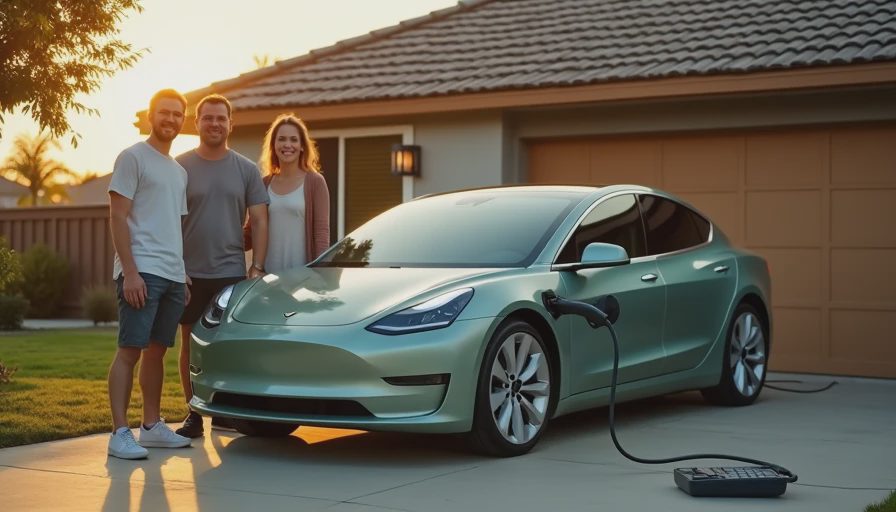
EVs have fewer moving parts than internal combustion cars—no oil changes, no timing belts, no exhaust systems. Over five years, Consumer Reports data suggests EV owners spend about 50% less on maintenance and repairs than gas car owners. Brake pads last longer because regenerative braking does much of the work. Tires wear faster due to the weight of the battery pack, but that's a relatively small cost. Expect to save $300–$500 per year on maintenance compared to a gas car. That's real money, but it's not life-changing.
Incentives and Tax Credits
Federal tax credits can knock $3,750 to $7,500 off the purchase price of a new EV, depending on the model and your tax liability. Many states and utilities add their own rebates—up to $2,500 in some places. These incentives dramatically shorten the payback period. If you buy a $45,000 EV and get a $7,500 federal credit plus a $1,500 state rebate, your net cost is $36,000. Suddenly the comparison to a $32,000 gas car looks much closer. But these incentives phase out and change, so you need to check current rules.
Depreciation and Resale Value
EVs have historically depreciated faster than gas cars, partly because technology improves quickly and battery replacement is a concern. A three-year-old EV might lose 50% of its value, while a comparable gas car loses 40%. However, that gap is narrowing as the market matures. If you plan to keep the car for 8–10 years, depreciation matters less. If you lease or trade every three years, the higher depreciation eats into your savings. So do electric cars really save you money? For short-term owners, probably not. For long-term owners, yes.

Insurance Costs
Insurance for EVs tends to be slightly higher than for gas cars—about 10–15% more on average, according to industry data. That adds maybe $150–$250 per year. But some insurers offer discounts for low-mileage or for using telematics. And because EVs are cheaper to maintain, some owners find their overall insurance and maintenance bill is still lower than for a gas car. Check with your agent before buying.
The Bottom Line: When Does an EV Save You Money?
After running the numbers for different scenarios, here's my honest answer. Do electric cars really save you money? They do if you drive enough miles (at least 12,000 per year), can charge at home with reasonable electricity rates, qualify for the full federal tax credit, and keep the car for six years or longer. Under those conditions, total ownership costs can be thousands less than a gas car over the vehicle's life. But if you drive few miles, can't charge at home, buy a luxury EV that doesn't qualify for credits, or trade in after three years, you might actually spend more. There's no universal yes or no—only honest math for your situation.
If you're seriously considering an EV, I recommend using the Department of Energy's eGallon calculator and a total cost of ownership tool like the one from Edmunds. Run your own numbers with your local electricity rate, your annual mileage, and your preferred model. That spreadsheet will tell you more than any blog post. For me and my family, the numbers worked. But I don't expect them to work for everyone, and that's okay. The best EV is the one that fits your life without asking you to change your personality.