
The federal electric vehicle tax credit is the single most valuable incentive for most American EV buyers — and the single most misunderstood. Owen Barrett receives more confused emails about this topic than almost any other, and the confusion is understandable. The rules have changed several times in recent years, the eligibility requirements are layered, and the phrase "tax credit" makes people think of complicated filings and waiting for a refund.
In 2026, the credit is more accessible than it used to be, but it is not automatic. You need to know what you qualify for before you walk into a dealership, because the assumptions you bring to the transaction can cost you money. Here is what matters.
The two credits: new and used
There are now two distinct federal tax credits for EV buyers, and they work differently.
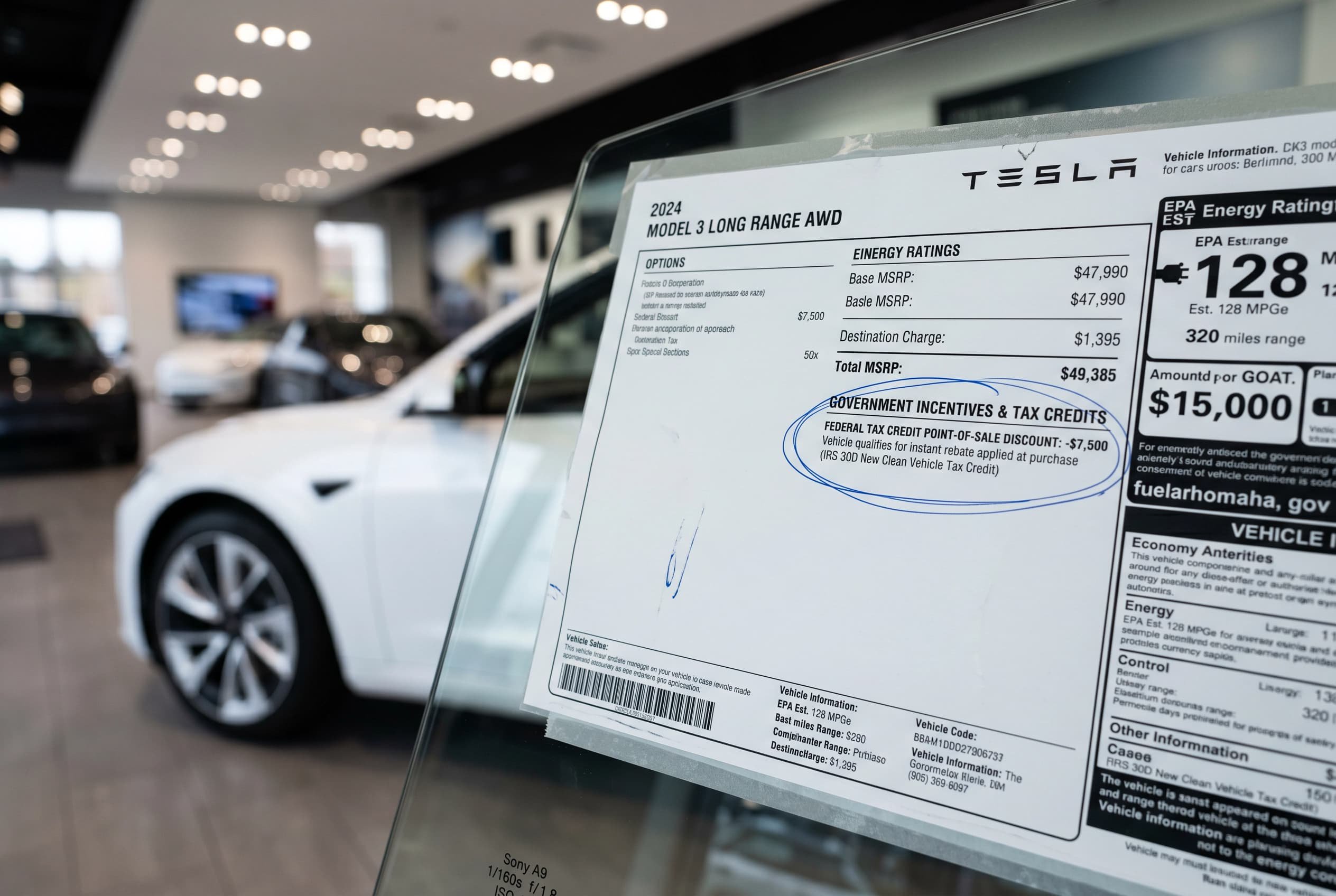
The new vehicle credit applies to qualifying new electric vehicles and plug-in hybrids purchased from a dealer. It can be worth a significant amount, and since 2024, dealers have been able to apply it as an instant price reduction at the point of sale. You do not wait for tax season. You do not file extra paperwork hoping for a refund. The discount comes off the price of the car before you sign. This change alone has made the credit far more useful for buyers who need the savings up front rather than months later.
The used vehicle credit applies to qualifying used electric vehicles purchased from a licensed dealer. It covers a smaller amount, but for a buyer shopping in the more affordable end of the market, it represents a meaningful percentage of the purchase price. Like the new-vehicle credit, it can be applied at the point of sale.
Both credits have income limits, vehicle price caps, and specific eligibility rules. Walking into a dealership unaware of those limits is a fast way to be disappointed by a finance manager who has to deliver bad news.
The table below summarizes the basics of each credit.
Credit feature | New vehicle credit | Used vehicle credit |
|---|---|---|
Maximum credit amount | Higher | Lower, but significant relative to used prices |
Vehicle price cap | Applies — vehicles above the cap do not qualify | Applies — lower cap than new vehicles |
Income limit | Yes, based on modified adjusted gross income | Yes, lower threshold than new-vehicle credit |
Point-of-sale availability | Yes, at participating dealers | Yes, at participating dealers |
Vehicle must be | New, qualifying model year, purchased from dealer | At least two model years old, purchased from dealer |
Battery and assembly requirements | Subject to sourcing and assembly rules | Not subject to the same strict requirements |
The income limits that trip people up
The income limits on both credits are based on your modified adjusted gross income, which is a specific IRS definition that may differ slightly from the number you think of as your income. You can qualify using either your current year's income or the prior year's income, whichever works in your favor.
This flexibility is helpful, but it also means you need to know both numbers before you shop. A buyer who changed jobs recently or had an unusual income year might qualify under one year but not the other. The dealership cannot determine this for you. It is your responsibility.
The income limits phase out at different thresholds depending on your tax filing status. A single filer has one limit. A married couple filing jointly has a higher limit. A head of household falls somewhere in between. The limits are not adjusted for dependents or deductions. If your income exceeds the threshold by even a small amount, the credit disappears entirely. There is no partial credit for being close.
Not every EV qualifies — and the list changes
A common frustration Owen hears from readers goes like this: "I found an EV I like, but the dealer says it does not qualify for the credit. Why not?"
The answer usually involves one of several disqualifying factors. The vehicle's manufacturer suggested retail price may exceed the cap for its vehicle class. The vehicle may be assembled outside of North America. The battery components or critical minerals may not meet the sourcing requirements that increase over time. Or the manufacturer may have already sold enough qualifying vehicles to trigger a phaseout, though this last restriction is less common now than it was in the credit's earlier years.
The list of qualifying vehicles is maintained by the IRS and the Department of Energy, and it updates periodically. What qualified last month may not qualify this month if the manufacturer's supply chain has changed. Before you commit to a specific car, check the current list. Do not rely on the dealership's inventory listing, which may not have been updated. Do not rely on what a friend bought six months ago.
How the point-of-sale transfer works
The most practical improvement to the credit in recent years is the point-of-sale transfer. Instead of claiming the credit on your tax return and waiting for a refund, you can transfer the credit to the dealer at the time of purchase. The dealer applies it directly to the price of the vehicle, reducing the amount you finance or pay in cash.
To do this, you must buy from a dealer that is registered with the IRS for the transfer program. Most franchised dealerships are registered. Some independent used-car lots are not. You must also provide the dealer with information about your income eligibility, and you are legally responsible for the accuracy of that information. If you claim eligibility at the point of sale but later turn out to be over the income limit, you will have to repay the credit when you file your taxes.
This repayment risk is worth understanding before you use the point-of-sale option. If your income is near the eligibility threshold or varies from year to year, talk to a tax professional or at least run the numbers carefully. The credit is a benefit, not a loophole, and the IRS has mechanisms to recover improperly claimed amounts.
State and utility incentives stack on top
The federal credit gets the most attention, but many states and local utilities offer additional incentives that can make a meaningful difference in total cost. Some states offer a rebate or tax credit that stacks with the federal credit. Some electric utilities provide a rebate for installing a home charger or offer reduced electricity rates for EV owners who charge during off-peak hours.
These programs vary so widely that no single article can cover them all. Owen's advice is to spend thirty minutes searching for incentives specific to your state, your utility provider, and even your employer. The Department of Energy maintains an incentive finder tool that is worth using. A thirty-minute search that uncovers a rebate you would have missed otherwise is a high-return use of your time.
The table below lists the most common types of additional incentives and where to look.
Incentive type | What to look for | Where to check |
|---|---|---|
State rebate or tax credit | Direct purchase rebate or additional state tax credit | State department of revenue or energy office website |
Utility rebate for home charger | Partial reimbursement for Level 2 charger purchase and installation | Your electric utility's EV or energy-efficiency program page |
Utility time-of-use rate | Lower electricity rate for overnight charging | Your utility's rate plan options |
Employer charging benefit | Free or subsidized workplace charging | Your HR or facilities department |
Local air district rebate | Regional incentives in areas with air-quality programs | Local air quality management district website |
The honest summary
The federal EV tax credit is real, valuable, and more usable than it was five years ago. It is also complicated in ways that reward preparation and punish assumptions.
Before you visit a dealership, know your income eligibility under both the current and prior tax years. Check the IRS list to confirm the specific vehicle you are considering still qualifies. If you plan to use the point-of-sale transfer, verify that the dealer is registered with the program. Keep the paperwork. And if your income is anywhere near the threshold, confirm your eligibility with someone who knows what they are doing before you sign.
The credit is not designed to be confusing, but it is designed to be specific. The burden is on you, the buyer, to know the rules. The reward for that effort is thousands of dollars off the price of a car. That is a tradeoff worth taking seriously.