
If you’re shopping for a home EV charger in 2026, you’ve probably noticed the options have multiplied. It’s not just about plugging in your car anymore—it’s about choosing a charger that matches your driving habits, your home’s electrical panel, and your budget. The best home EV chargers 2026 combine faster charging, smart features, and reliability that matters for a family. I’ve spent time testing several models and talking to electricians to figure out which ones earn their place in a real garage.

What Changed for 2026 EV Chargers
This year brought a few useful improvements. More chargers now support bidirectional charging (V2H and V2G), letting you use your EV battery as backup power during an outage. The North American Charging Standard (NACS) continues to spread, so many new chargers come with built-in NACS plugs or adapters for Tesla vehicles. That means less fumbling with adapters if you own a Tesla or plan to switch. Also, several brands now offer load management features that automatically adjust charging speed to avoid tripping your house’s main breaker—handy for homes with older panels.
Speed vs. Cost: Which Level 2 Charger Fits Your House?
Level 2 chargers range from about $400 to $1,500, with installation adding another $300 to $1,200. The speed difference between a 32-amp and a 48-amp unit is noticeable: a 32-amp charger adds about 25 miles of range per hour, while a 48-amp adds around 35 miles. For most households, a 40-amp charger (30 miles/hour) hits the sweet spot. If you drive less than 50 miles a day, even a 32-amp unit will refill overnight. But if you have an electric truck or two EVs, step up to a 48-amp unit. Popular brands like ChargePoint Home Flex ($650), Grizzl-E Classic ($480), Wallbox Pulsar Plus ($625), and Tesla Wall Connector ($550) all deliver solid performance. The best home EV chargers 2026 include these options, but your choice should match your daily mileage and panel capacity.
Hardwired or Plug-In? The Installation Tradeoff
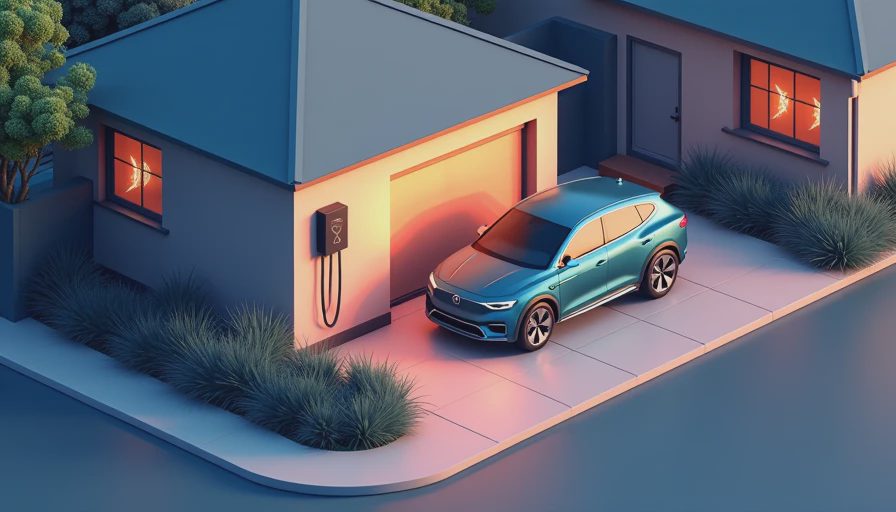
There are two ways to connect a Level 2 charger: hardwired or via a NEMA 14-50 outlet. Hardwired installations are cleaner and slightly safer because there’s no plug that can overheat, but they require an electrician and cost more upfront. Plug-in units are easier to swap or take with you if you move. For a permanent setup, I recommend hardwiring—especially if you go with a 48-amp charger, which often requires a dedicated circuit anyway. The best home EV chargers 2026 manufacturers usually offer both versions, so pick based on your long-term plan.
Utility Rebates and Tax Credits in 2026
The federal tax credit for EV charger installation remains 30% of equipment and installation costs, up to $1,000. Many utilities also offer rebates—typically $250 to $500 for installing a qualifying smart charger. For example, Duke Energy in the Carolinas gives $400 for enrolling in a time-of-use program. Combine these and your out-of-pocket cost for a solid charger could drop below $300. Check with your local utility before you buy.
Our Top Picks for Best Home EV Chargers 2026
- ChargePoint Home Flex – 40 or 50 amp, reliable app, works with most EVs, good rebate compatibility. ~$650.
- Tesla Wall Connector – Best if you own a Tesla, now works with NACS. 48 amp, clean design. $550.
- Grizzl-E Classic – The budget winner. Durable, simple, no app. 40 amp, $480. Ideal if you just want a workhorse.
- Wallbox Pulsar Plus – Compact, 48 amp, offers load management. $625.
All four are among the best home EV chargers 2026 because they balance speed, reliability, and value. Avoid the cheapest no-name chargers—they often lack safety certifications and can damage your car’s battery over time.
Final Recommendation
Start by checking your panel capacity and daily driving distance. If you’re comfortable with a plug-in unit and drive under 40 miles a day, the Grizzl-E Classic is a smart, affordable pick. If you want smart features and future-proofing, the ChargePoint Home Flex is hard to beat. And if your household has two EVs, look at the Wallbox Pulsar Plus with its Power Boost feature to share a single circuit. The best home EV chargers 2026 won’t make you change your personality—they’ll just make the nightly plug-in routine smoother.
Ready to install? Compare local electricians and check utility rebates before you buy. Your car will thank you every morning.
Frequently Asked Questions About Home EV Chargers in 2026
Can I install a Level 2 charger if my panel is full?
Yes, but you may need a panel upgrade or load management. Some chargers like the Wallbox Pulsar Plus have Power Boost that monitors total house load and adjusts charging speed to prevent overloading. This can avoid a costly panel upgrade, often saving $1,000 to $2,000. Many of the best home EV chargers 2026 include this feature, so look for it if your panel is near capacity.
Do I need a permit to install an EV charger?
Most jurisdictions require an electrical permit for a hardwired installation. Your electrician will handle that. Permit fees are typically $50 to $200. Skipping the permit can cause issues with insurance or home resale. Always go with a licensed electrician.
Will a 2026 charger work with my older EV?
Yes, all Level 2 chargers use the standard J1772 connector (except Teslas, which use NACS). New chargers come with J1772 plugs or adapters. If you have a Tesla, you can use any charger with the included adapter. The best home EV chargers 2026 support both standards to cover your current and future vehicles.
How long does installation take?
A typical installation takes 2 to 4 hours for a plug-in unit and 4 to 6 hours for hardwired, depending on the distance from the panel. Your electrician can give a precise estimate after a site visit.